Electric Tankless Electrical Requirements
Does an Electric Tankless Water Heater Require an Electrical Panel Upgrade?
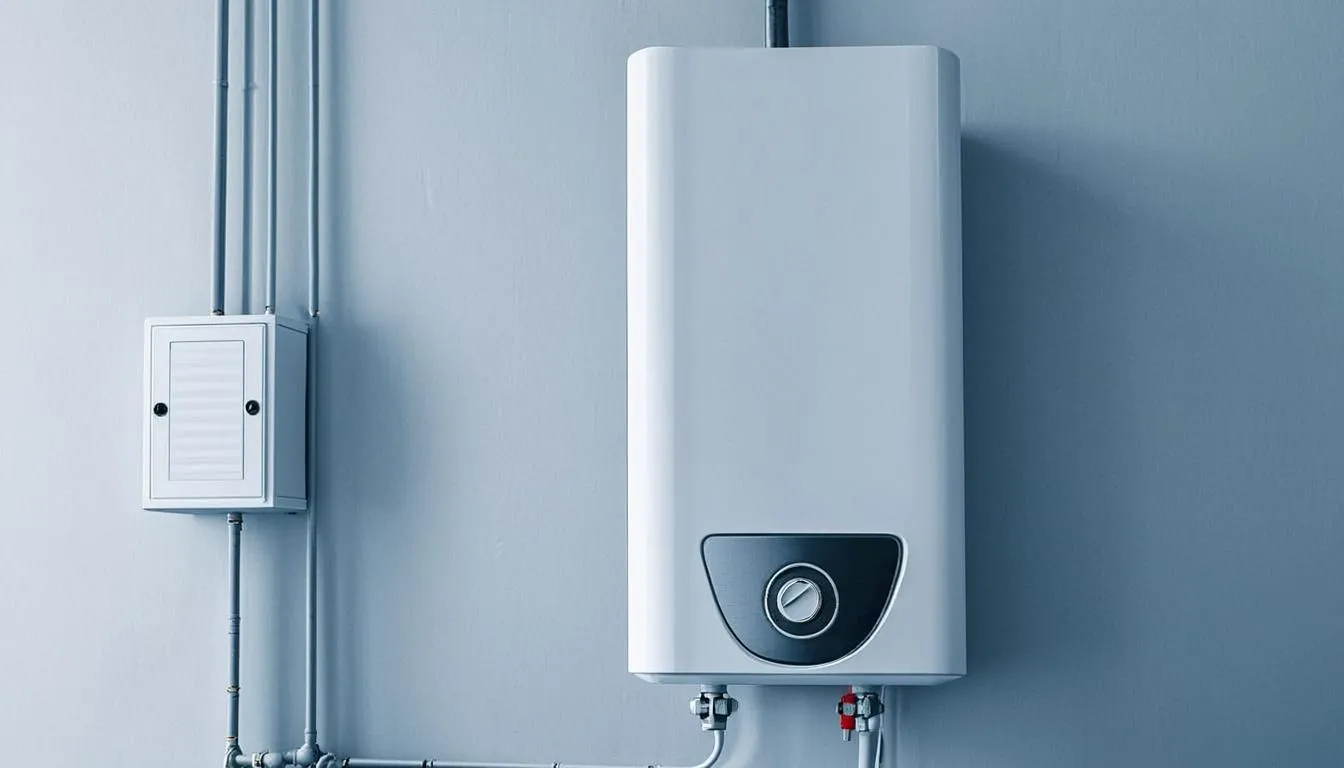
Illustrative image — an electric tankless water heater wired to dedicated circuits in a utility room.
Electric tankless promises the cleanest installation imaginable: no gas, no venting, no combustion. The catch lives in your electrical panel, where the promise meets amperage. Understanding the numbers turns a vague worry into a one-visit answer.
How Much Power Whole-House Units Draw
Heating flowing water electrically in seconds takes enormous instant power. Whole-house electric tankless models commonly draw in the range that dwarfs every other appliance in the home, often approaching what an electric range, dryer, and air conditioner would use combined. That is not a flaw; it is physics, since resistance heating must deliver the entire temperature rise instantly.
Voltage, Amperage, and Kilowatts in Plain Terms
Kilowatt ratings describe the unit's appetite, amperage describes what each circuit carries, and voltage describes the supply feeding both. The practical reading: high kilowatt ratings translate into multiple high-amperage circuits, and the panel must host all of them simultaneously without crowding out everything else you own.
Dedicated Circuits and Breakers
These units do not share. Each heating element gets its own dedicated circuit and breaker, wired to the model's specification. Sharing circuits with existing loads is not an option, which is why the panel's physical space matters as much as its capacity: breakers need slots, and slots need room.
Panel Capacity: The First Honest Check
A panel has a total rating and a realistic budget. Add the new unit's continuous demand to your existing loads and compare against what the service actually delivers. Older panels with capacity to spare make electric tankless easy; crowded panels make it a construction project. Our electric tankless page documents how this assessment runs.
Main Service Capacity
Behind the panel sits the service: the conductors and meter feeding it. Homes with generous service accommodate growth; homes with modest service may need the utility-coordinated upgrade path before any panel work matters. Both scenarios price differently, which is exactly why the survey measures before quoting.
When an Upgrade Becomes Necessary
Three signals usually settle it: no physical slot space for the required circuits, a load calculation that exceeds service capacity, or an older panel whose design predates modern demands. Upgrades happen under electrical permits with utility coordination, and they price as their own line, never hidden inside equipment pricing.
Whole-House vs. Point-of-Use Electric
The burden scales with ambition. Point-of-use units serve one fixture with modest draw and modest circuit needs, which many panels absorb easily; they suit remodeled baths, distant additions, and garage workstations. Whole-house units inherit everything above. The upgrade page covers mid-size options between the poles.
Cost Factors an Electric Install Carries
Estimates itemize the equipment, the circuits by count and length, breakers, any panel or service work, permits, and inspection fees. Homes electing the hybrid heat pump path instead see that scope priced alongside, since the heat pump page deserves a comparison before anyone commits. Every line lands in writing, and the phone at the top of the page answers day or night.
The takeaway: Whole-house electric tankless is the most power-hungry appliance most homes ever host. Whether your panel and service can feed it is measurable in minutes, and the measurement precedes every honest quote.