Tankless Installation Cost Northern Virginia
What Drives Tankless Water Heater Installation Cost in Northern Virginia?
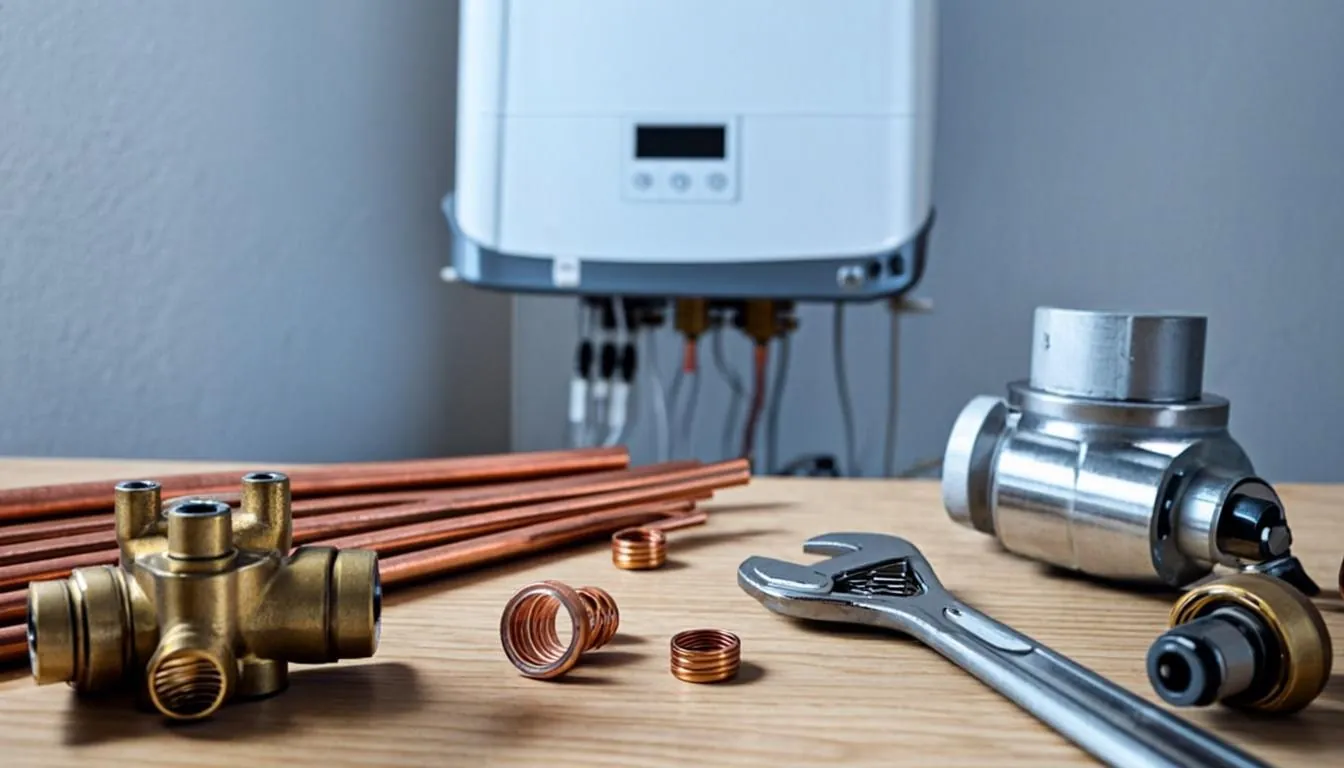
Illustrative image — itemized factors behind tankless water heater installation cost in Northern Virginia.
Ask three contractors for a tankless price and you will collect three different numbers, none of them wrong and none of them comparable. The reason is that installation cost across Northern Virginia is mostly infrastructure, and every house carries a different amount of it. Here is what actually moves the number.
Tankless Equipment Cost Factors
Capacity and technology tier set the floor. Higher GPM classes cost more than smaller ones; condensing platforms carry a premium over non-condensing; brand positioning plays its part. The equipment is the only line where every quote is comparing the same thing, which makes it the least interesting number on the page.
Labor and Installation Complexity
Labor scales with the plan, not just the hours. A like-for-like wall-mounted swap in an accessible utility space is a straightforward day; a relocation, a tight closet, or a multi-trade project adds carpentry, coordination, and inspection scheduling. Homes in older Leesburg neighborhoods and rural Loudoun properties often carry more of this hidden work than newer subdivisions do, which is why the survey happens before the number does.
Gas Line Modification Costs
A tank's gas line was sized for a tank. High-BTU tankless units ask more of the system, so meter capacity checks and line upsizing are common on conversions. Where a new run is needed, length and routing join the quote. Skipping this work is how units end up starved, and why we measure rather than assume.
Venting and Condensate Drain Costs
Non-condensing units need stainless vent runs; condensing units use plastic-grade materials but add a condensate drain. Run length, terminations, and penetration work swing the cost. Condensing installs also price a drain path, including pumps where gravity routing fails.
Electrical Panel and Circuit Upgrade Costs
Even gas tankless models want modern electrical connections, and whole-house electric units want dedicated circuits. Where the panel lacks headroom, service upgrades become the dominant line item, and at that point the technology conversation changes; our electric tankless page handles that boundary honestly.
Tank-to-Tankless Conversion vs. Like-for-Like Replacement
Replacing an old tankless unit with a new one reuses most of the surrounding infrastructure, so the quote concentrates on equipment and labor. A conversion changes the infrastructure itself: gas line sizing, venting routes, condensate drainage, sometimes circuits. The two projects can share a model number and still land thousands of dollars apart, which is why the conversion page treats them as separate projects from the first question.
Permits and Inspection Considerations
Loudoun County issues plumbing, gas, mechanical, and electrical trade permits as separate applications, and county guidance notes plans review applies to some residential fuel-gas permits. Permit costs and inspection scheduling belong inside the estimate, not after it.
Draining, disconnecting, hauling, and disposing of the old equipment is real work with real cost, too. Quotes that bury it in a round number are hiding the least honest part of the bid.
How to Compare Contractor Estimates
| Line Item | Why It Varies | What to Ask |
|---|---|---|
| Unit class | Capacity and technology tier | Which GPM and efficiency class, and why |
| Gas work | Line length, meter capacity | Was capacity measured or assumed? |
| Venting | Run length and material | Where does it terminate? |
| Condensate | Gravity vs. pumped path | Where does it drain? |
| Electrical | Circuit and panel condition | What did the load check show? |
| Permits | Trade count and plans review | Which filings are included? |
A quote that answers those six questions in writing is a quote you can sign. Ours do; the tankless installation page describes the process end to end.
Where Rebates Soften the Number
Washington Gas's Smart Savings program offers rebates of up to $400 on select ENERGY STAR certified water heaters for Virginia customers, and manufacturers run rotating promotions. Eligibility changes, so verify terms at estimate time; our Virginia rebate guide collects what is current.
The takeaway: Two identical tankless units can land at very different project prices, and the difference is infrastructure. Compare line items, not totals, and demand the written scope behind every number.