Gas vs. Electric vs. Propane Tankless
Gas vs. Electric vs. Propane Tankless: Which Should You Choose?
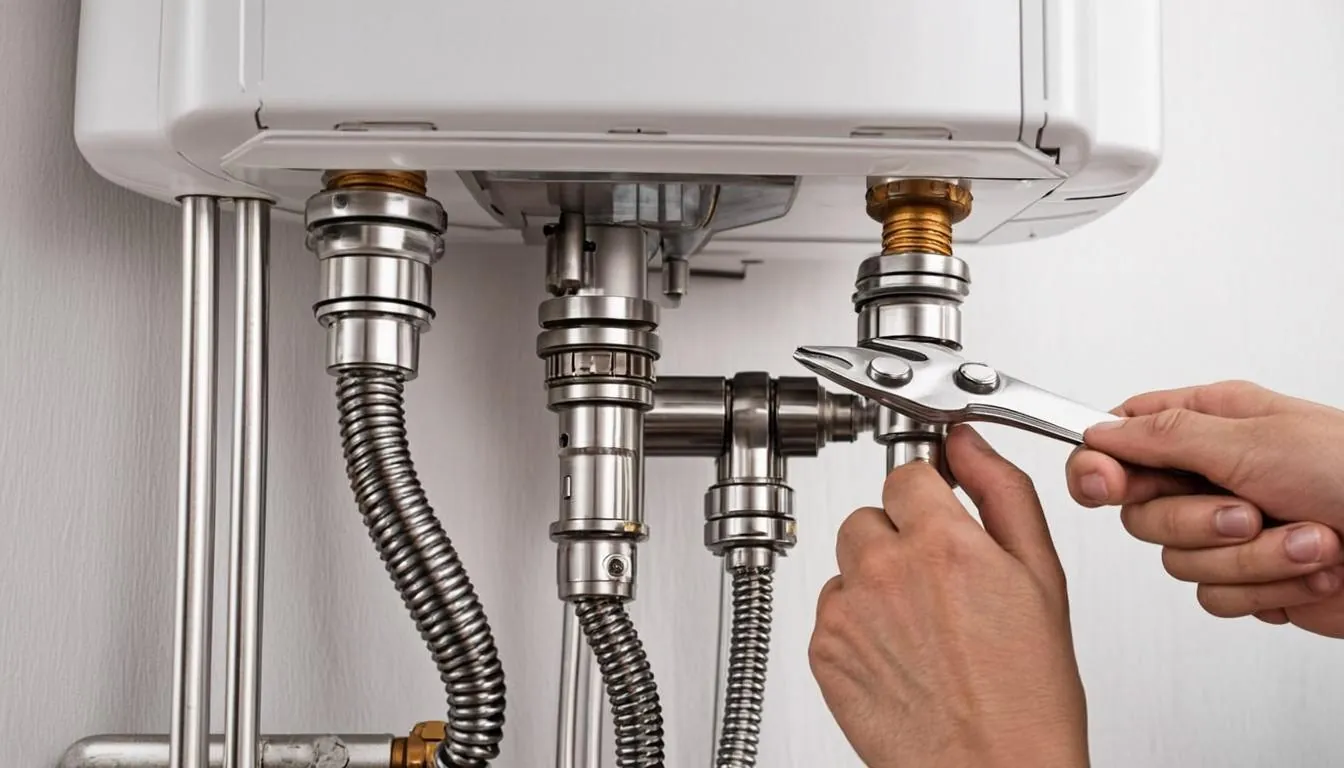
Illustrative image — a gas tankless water heater installed in a Loudoun County utility space.
Ask which fuel makes the best tankless water heater and you will get a debate. Ask what your house can actually support and the debate ends, because infrastructure decides this question more than preference does. Here is how the three fuels really compare for Loudoun County homes.
The Three Options in One Frame
All three deliver on-demand heat. They differ in what they demand back: gas wants fuel capacity and venting, propane wants the same plus tank logistics, and whole-house electric wants an electrical service that most homes never budgeted for. Matching those appetites to your property is the whole decision.
Natural Gas Tankless Water Heaters
Where gas service reaches the address, gas tankless is usually the strongest performer for family demand. Burners modulate across a wide range, output comfortably serves multi-bathroom households, and operating costs track with gas prices. The installation burden is real: gas line capacity must feed the unit's input rating, venting gets rerouted, and condensing models add condensate drainage. Our gas tankless installation page covers the full scope.
Propane Tankless Water Heaters
Propane units are gas units with a different fuel meter. Output and comfort match their natural gas siblings. The differences are logistical: a tank on the property, deliveries or bulk fills, and regulator sizing planned into the install. For rural Loudoun addresses beyond the gas map, propane is routinely the strongest option rather than a compromise, provided the tank and piping are engineered honestly.
Electric Tankless Water Heaters
Electric units flip the infrastructure burden from fuel to power. Point-of-use models serve single fixtures modestly and are genuinely practical. Whole-house electric tankless is a different animal, demanding dedicated high-amperage circuits and a service panel with real headroom; many homes cannot offer either without upgrades that reshape the project budget. Where the panel cooperates, the appeal is real: no combustion, no venting, compact wall space. Our electric tankless page walks the requirements.
Installation Requirements by Fuel
Gas supply and BTU capacity
Meter size, pipe diameter, and total appliance demand all get measured against the burner's input rating before any gas model is named.
Propane tank and regulator
Tank sizing reflects household consumption, and the regulator and piping must sustain peak draw without pressure sag.
Electrical panel and circuits
Whole-house electric units need dedicated circuits and service capacity verified by measurement, not optimism.
Venting and combustion air
Gas and propane units require approved venting routes and combustion air; electric units trade that burden for circuit work.
Operating Cost in Honest Terms
Fuel prices move, usage patterns differ, and efficiency ratings interact with both, so any single operating-cost claim ages badly. What stays true: gas and propane heat water quickly and currently price favorably per unit of heat for most households, while electric resistance heating usually costs more to run unless rates are unusually low. That is exactly why homes on electric service hear about hybrid heat pump water heaters as an alternative; the heat pump page explains the technology that moves heat instead of making it.
Which Fuel Fits Which Loudoun Homes
Natural gas service exists in portions of Loudoun County only, so the first question is whether your address has it at all. Leesburg town homes with gas service lean gas tankless. Rural parcels in Aldie, Waterford, and Lucketts usually find propane strongest. Townhouses and all-electric homes weigh electric options against panel reality, and often land on hybrid technology. Our tankless installation page turns whichever path applies into a measured written estimate.
The takeaway: Fuel choice is infrastructure choice. Gas wins where service reaches the street, propane fills the gaps competently, and electric tankless lives or dies by panel capacity. Measure the house first, then pick the fuel.