Tankless Flush Frequency
Tankless Water Heater Flush: How Often Does Yours Need One?
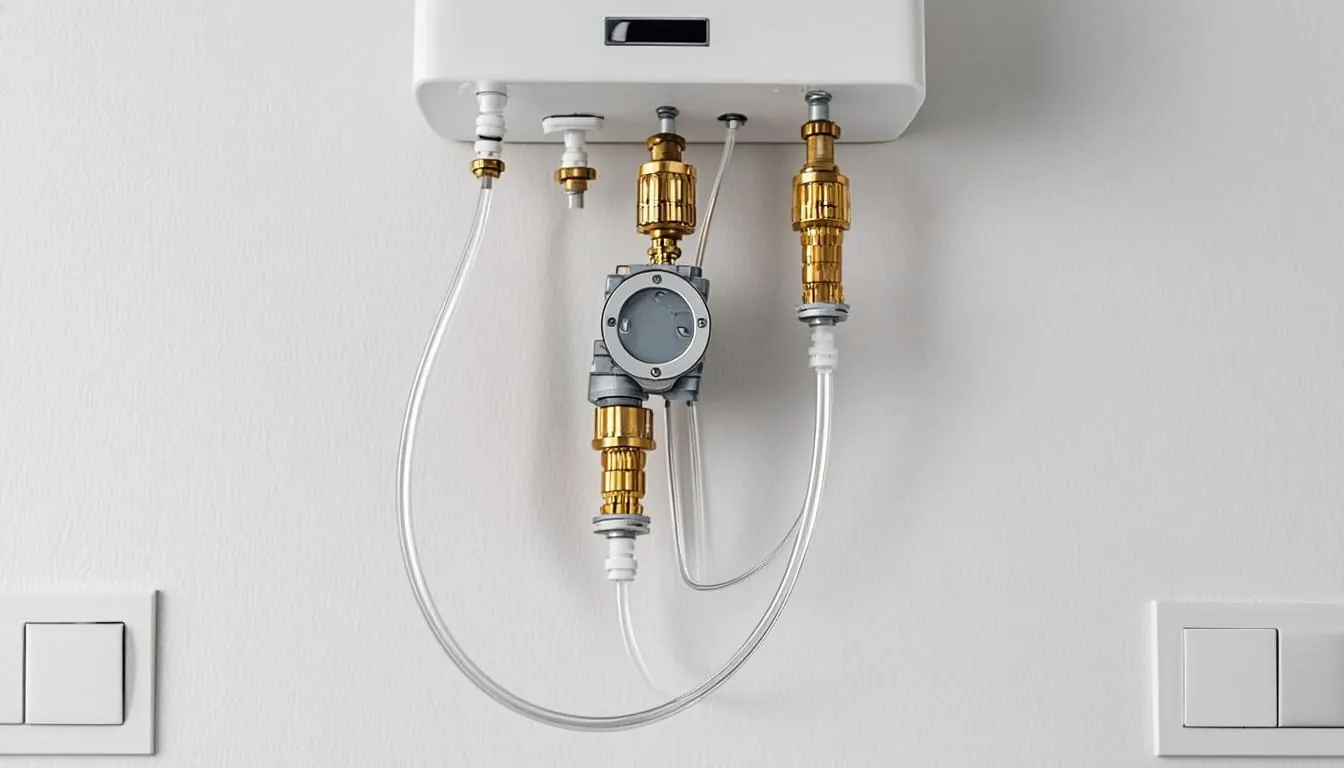
Illustrative image — tankless water heater flush and descaling service in progress.
Ask five sources how often a tankless water heater needs flushing and you will get five confident numbers. The honest answer is a range, set by the manufacturer's manual and narrowed by two local variables: what your water carries and how hard your household runs the unit.
Why Flushing Matters at All
A tankless heat exchanger is a serpentine pathway with hard walls and fast flow. Dissolved minerals come out of solution as water heats, and they plate onto those walls as scale. Scale insulates, which forces higher surface temperatures, which accelerates more scale. Left alone, the curve ends with restricted flow, fluctuating temperatures, error codes, and eventually an exchanger that cannot be rescued.
The Two Variables That Set Your Interval
Water supply. Mineral content varies across our service area: the Town of Leesburg's system, Loudoun Water's service areas, and private wells around Loudoun County each behave differently, and softening equipment changes the picture again. The Town publishes an annual water quality report, and reviewing your supply's characteristics is part of our first maintenance visit.
Usage volume. A household moving hundreds of gallons a day through the exchanger deposits minerals faster than a couple in a townhouse. Demand patterns, not just presence, set the pace.
What a Proper Flush Includes
- Isolation and a pump-and-solution circuit through the exchanger at approved strength
- Inlet filter and screen cleaning, which protects the flow sensor
- Venting and termination inspection for gas units
- Condensate line flush and neutralizer check on condensing models
- Gas connection and combustion observation, or electrical connection checks
- A written record of findings and the recommended next interval
A flush that skips the filters, vents, and condensate path is half a job; the full visit is what keeps warranties intact and emergencies rare. Our maintenance page documents the complete scope.
Signs Your Unit Is Overdue
Output that has dulled gradually, temperatures that wobble where they used to hold, slightly longer waits for hot water, and error codes related to flow or overheat conditions all point at fouling. Any of them justifies moving the service visit up.
DIY or Professional?
Handy owners can run a basic descaling circuit with the right pump kit and isolation valves, and we respect that. The parts of the visit that catch other problems, combustion observations, vent condition, condensate health, gas connection integrity, belong with a technician. When a flush reveals a failing component, the repair page picks up the story with a written estimate.
The takeaway: The manual sets the framework; your water supply and usage set the interval. In our experience around Leesburg, the houses that flush on schedule are the houses we rarely meet on emergency calls.