Tankless Gas Line Requirements
Does Your Home Need a Gas Line Upgrade for a Tankless Water Heater?
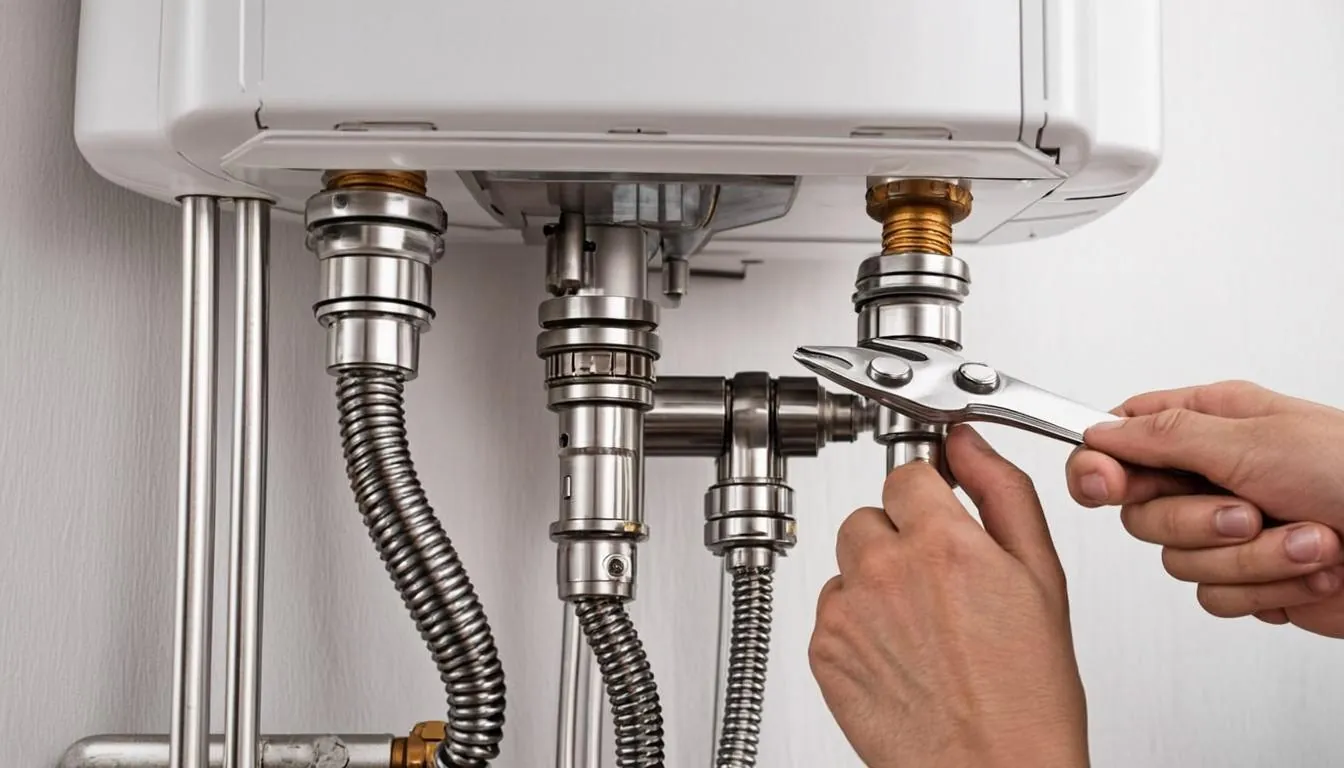
Illustrative image — gas piping measured and prepared for a tankless water heater installation.
The surprise inside many tankless quotes is a gas line upgrade the homeowner never expected. It is not an upsell; it is arithmetic. Tankless burners demand far more fuel per moment than the storage tanks they replace, and a line that fed a tank perfectly can starve a tankless unit exactly when it works hardest. Here is how the demand math works.
Why Tankless Units Need More Gas Capacity
A storage tank heats slowly across an hour, spreading its fuel appetite over time. A tankless unit must deliver the same total heat in seconds, which means the burner fires at a much higher rate while a shower runs. The pipe, meter, and regulator that comfortably served slow tank heating may fall short of a high-input burner's peak appetite.
BTU Input and What It Demands of the Pipe
Every model publishes an input rating, and that rating translates directly into a gas volume the supply system must sustain at pressure. Pipe capacity depends on diameter, total length, and every fitting between the meter and the unit; capacity tables exist for exactly this calculation. We run the numbers for your actual routing before naming equipment, which is why our quotes rarely grow surprises.
Pipe Diameter and Equivalent Length
Two variables dominate: the pipe's diameter and its equivalent length, where every elbow and tee adds to the straight-run figure. Longer runs need larger diameters to deliver the same volume at pressure. This is why two houses on the same street can get different answers from the same equipment choice.
Total Demand: Every Gas Appliance Counts
The water heater shares its fuel with everything else: furnace, range, dryer, fireplace, generator. Simultaneous demand sets the real load the system must carry, and the tankless unit's appetite stacks on top of the worst realistic combination. A line adequate for the old tank plus everything else may still need upsizing once the new burner joins.
Meter and Regulator Capacity
Sometimes the pipe is fine and the meter is the bottleneck. Utility meters carry their own capacity ratings, and the utility handles meter upgrades when service demands it. Regulators similarly must sustain peak draw without pressure sag. Both get checked during the survey so the scope lists every bottleneck, not just the obvious one.
When Modifications Become Necessary
Upsizing shows up in quotes in three shapes: a larger trunk line along part of the run, a dedicated branch to the new unit's location, or meter coordination with the utility. Each prices as its own line. The gas tankless page shows how this integrates into the full installation scope, and the conversion page carries the complete conversion sequence.
Pressure Testing and Safety
Gas work ends with pressure testing that proves the system holds, before any appliance fires. Leaks are found with instruments and pressure gauges, never with noses or open flames. This is standard practice on every gas project we run, and inspections close the loop formally.
Who Should Touch Gas Piping
Gas fitting is licensed trade work in Virginia, filed under its own permit. Sizing calculations, pressure testing, and inspection sequencing belong with qualified technicians, and our crew runs the whole chain from survey to final inspection. The upgrade page covers projects where an existing tankless unit needs fuel capacity it never had, and a written estimate puts every number on paper before work begins.
The takeaway: Tankless burners outdraw the tank lines they replace, often by a wide margin. Whether your pipe, meter, and regulator can feed them is a measurement, not a guess, and the measurement precedes every quote.