Leesburg VA Water Heater Permit
Do You Need a Permit to Replace or Install a Water Heater in Leesburg, VA?
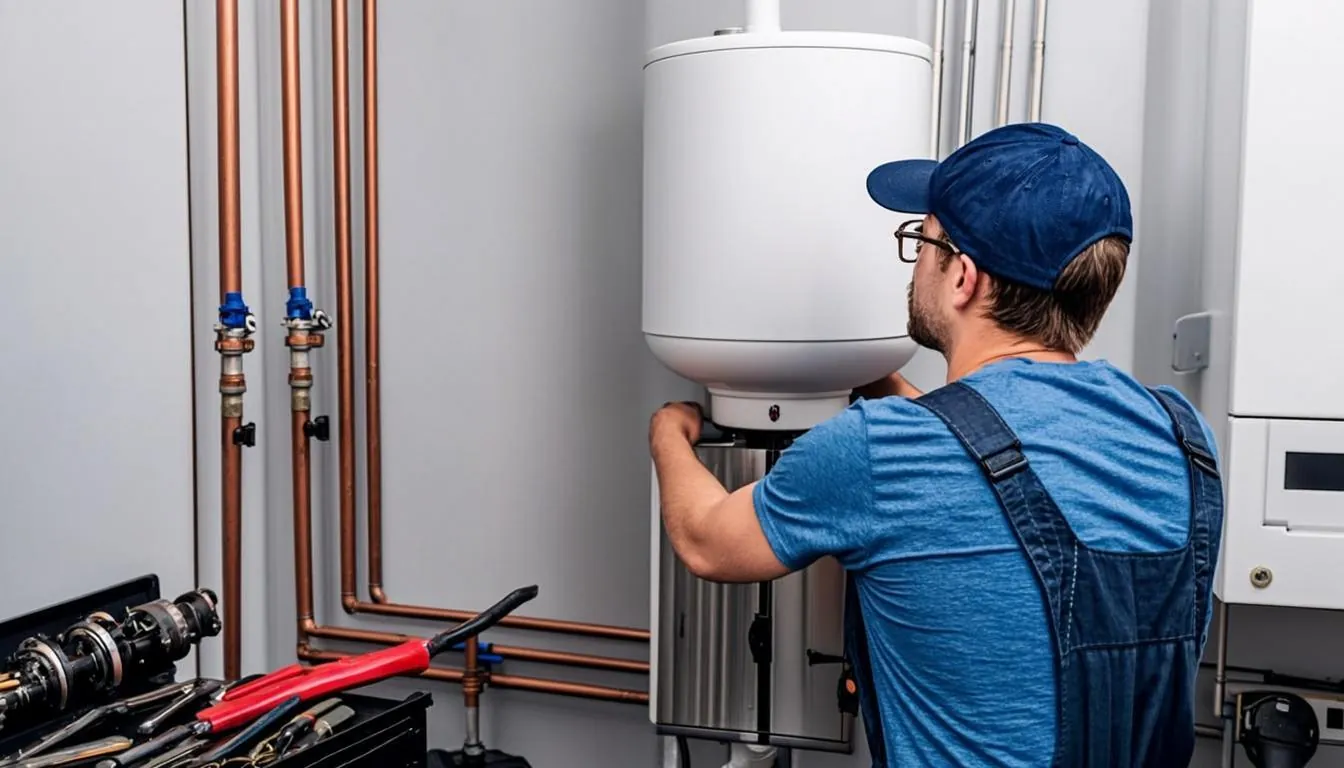
Illustrative image — a permitted water heater installation underway in Leesburg, Virginia.
Permits are the least romantic part of any water heater project and the one that protects you most. This guide explains how permitting works for Leesburg-area installations, so nothing about the process surprises you.
Who Handles Residential Permits in Leesburg?
Jurisdiction follows the parcel. Properties inside Town of Leesburg limits coordinate with town offices, while properties in unincorporated Loudoun County answer to county agencies. The county's own guidance reminds applicants that permits come from the appropriate county agencies and towns, which is the polite way of saying: check the address first, then file with the right authority.
Source: Loudoun County residential construction permits.
How Leesburg and Loudoun County Split the Map
The town's corporate boundaries carve the map into two permitting worlds, and parcels near the boundary occasionally surprise owners. Confirmation is part of our survey; the estimate names the authority your project files with before any work is scheduled.
Plumbing Permit Considerations
Water heater replacement touches potable water piping, which files under a plumbing permit regardless of the equipment involved. Even like-for-like tank swaps fall inside the plumbing permit's scope, which is why DIY plumbing work on heaters raises inspection questions later.
Gas Permit Considerations
Gas water heaters and any associated line work file under their own gas permit. Loudoun County's structure treats residential trade permits, electrical, gas, mechanical, and plumbing, as separate applications, so a gas tankless project typically files more than one. The county has also noted that plans review applies to some residential fuel-gas permits beginning October 1, 2025, which can add review time to certain scopes.
Electrical Permit Considerations
Circuit additions, panel work, and new electrical connections file under the electrical trade permit. Electric tankless upgrades and heat pump circuit additions live here, and the utility coordinates whenever service capacity itself changes.
Mechanical and Venting Requirements
Venting work for combustion equipment files under the mechanical permit in the county's structure. Tankless conversions that reroute vents are the classic example, and inspection checks the installed system against the model manual's requirements.
When Plan Review May Be Required
Plan review applies where the county's rules call for it, notably some residential fuel-gas scopes since the October 2025 change. Review adds a step between filing and permit issuance, which we schedule into the project rather than discovering mid-installation. The estimate timeline reflects it whenever it applies.
Inspections After Installation
Permitted work closes with inspections by the issuing authority. We schedule them, meet the inspector, and hand you the closed-permit paperwork at the end. An installation is finished when the paperwork says so, not when the water is hot.
HOA and Property Management Approval
Associations sit outside the permit system but inside real timelines. Exterior changes like vent terminations are the usual review triggers, and Loudoun County advises checking community association requirements where they apply. We flag association steps during the estimate and sequence them first.
Whatever the scope, the tankless installation page, gas installation page, and replacement page each describe the permitting their work files under. We prepare every application, and the phone above answers questions at any hour, including the ones that start with do I really need.
The takeaway: In Leesburg, the address decides the authority and the trade decides the permit. Separate applications, occasional plan review, and scheduled inspections are the process; we run all of it for you.