Condensing vs. Non-Condensing Tankless
Condensing vs. Non-Condensing Tankless Water Heaters
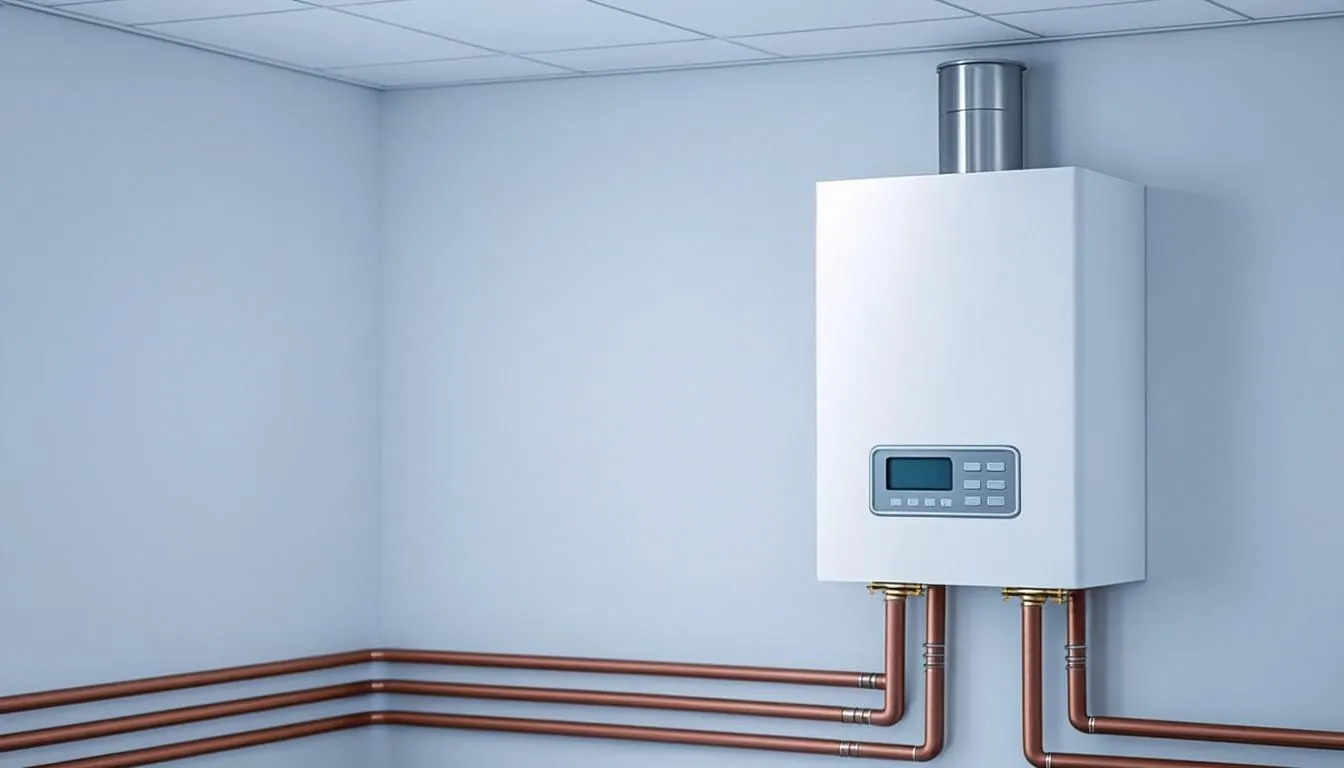
Illustrative image — a condensing tankless water heater installed with neat connections in a Leesburg home.
Both categories heat water on demand. The difference is what happens to the exhaust, and that single difference cascades into efficiency ratings, venting materials, drainage requirements, and price. Here is the comparison as it plays out in real installations.
What Makes a Unit Condensing
A condensing tankless unit captures heat from exhaust gases that a traditional design would simply vent outdoors. It routes combustion products through a secondary heat exchanger that extracts additional warmth, cooling the exhaust until water vapor in it condenses. That recovered heat is why condensing models post higher efficiency numbers from identical fuel input.
What Non-Condensing Designs Do Instead
Non-condensing units vent exhaust hot. Single heat exchanger, simpler construction, and exhaust temperatures high enough to demand metal venting rated for it. The design trades some efficiency for simplicity, which some installations genuinely prefer.
Inside the Heat Exchangers
Condensing models carry two exchangers: the primary one handling main heat transfer, the secondary one wringing the exhaust. More surface area means more places scale can accumulate, which makes water quality and flushing rhythm matter slightly more for condensing owners. Our flushing guide covers the maintenance rhythm either way.
Efficiency and Exhaust Temperature
Condensing units convert more of each therm of fuel into water heat, which shows up as lower operating cost per gallon delivered. Non-condensing units send that energy up the pipe. Over years of use the difference compounds, though fuel prices and usage patterns determine how loudly.
Venting Materials: The Practical Divide
Exhaust temperature decides the pipe. Non-condensing exhaust requires metal venting, typically stainless or approved galvanized categories, rated for high temperatures. Condensing exhaust leaves cool enough for PVC-class plastic venting, which is cheaper to buy and easier to route. That material swing influences installation cost in both directions and matters most where venting runs are long.
Condensate: The Extra Line Condensing Units Bring
Condensed vapor is mildly acidic water, and it has to go somewhere. Condensing installations add a condensate drain line, and many manufacturers call for a neutralizer that tempers the acidity before discharge. Routing that line is straightforward in basements with drains and requires a pump where gravity cannot help. Non-condensing units skip this entirely.
How Price Differences Stack Up
Condensing equipment typically costs more upfront and repays part of that in fuel savings; PVC venting claws some installation cost back. Non-condensing equipment prices lower and vents in metal, with slightly higher operating cost over time. The honest comparison happens at the estimate, where venting length, drainage access, and usage volume are known numbers rather than assumptions.
Which One Makes Sense for a Leesburg Home?
Homes with basement installs, nearby drains, and steady hot water demand usually reward the condensing choice. Tight budgets on shorter venting runs, or houses where a condensate path would be contrived, can justify non-condensing legitimately. Our gas tankless page covers the equipment families, the replacement page applies them when swapping an old unit, and the upgrade page prices the step up. Every option lands in one written estimate, and the phone line behind it never closes.
The takeaway: Condensing units squeeze more heat from the same fuel and pay for it with PVC-class venting and a condensate line. Non-condensing units run simpler and hotter. Your house, not the brochure, picks the winner.