HPWH Installation Requirements
Heat Pump Water Heater Airflow, Condensate and Noise Requirements
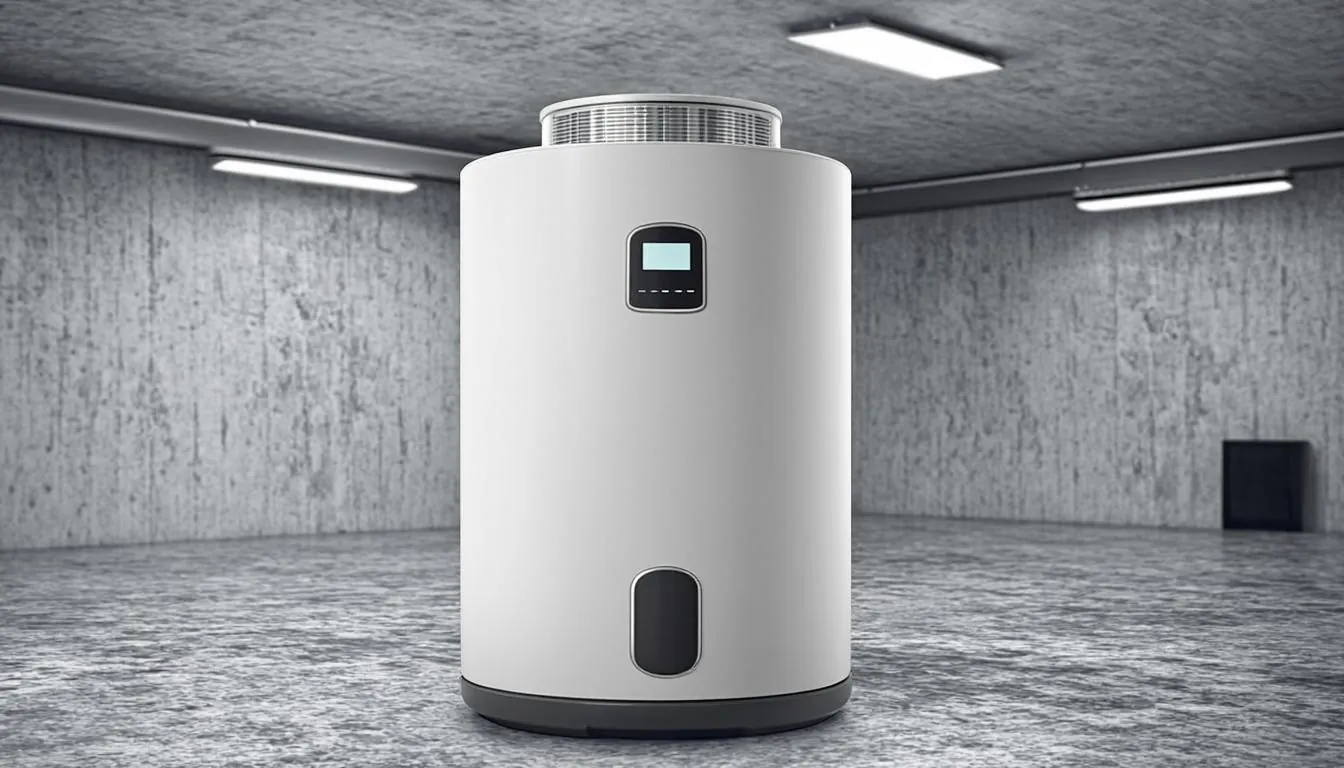
Illustrative image — a heat pump water heater placed with proper airflow clearances in a basement.
Most heat pump water heater disappointments trace to placement, not equipment. The technology performs exactly as designed when the room lets it breathe, and underperforms when it does not. This guide covers the three placement requirements every assessment checks.
Why the Unit Needs Airflow
The heat pump harvests warmth from surrounding air; that is its fuel supply. Air flows across the evaporator, gives up its heat, and exits cooler. A unit installed in a sealed closet starves within its own little atmosphere, cooling the room until the harvest slows and resistance elements carry the load instead. ENERGY STAR's installation guidance treats airflow and drainage as first-order requirements precisely because of this.
Source: ENERGY STAR heat pump water heater installation best practices.
Space and Clearance Basics
Each model publishes its own minimums: air volume around the unit, clearance at the intake and discharge, and overhead room for filter service. The numbers differ by model and configuration, so the assessment reads the manual for the specific equipment rather than reciting folklore. Basements with open plans pass easily; louvered doors sometimes bridge marginal closets; sealed ones usually do not.
Ducting and Louvered Doors as Bridges
Marginal spaces have remedies. Louvered doors open the closet to the room's air volume, and some models support ducting that pulls intake air from, or sends discharge air to, another space. Both remedies have engineering limits, and both belong in the written plan when the location needs them.
Condensate Drainage Requirements
Harvesting heat wrings moisture from the air, and that condensate collects at the unit's base. A proper drain path is mandatory: gravity lines to nearby drains where the floor allows, condensate pumps where gravity cannot. The line gets routed to an approved discharge; tying it into the home's drain-waste-vent system in ways the code does not permit is a classic mistake the assessment prevents.
Condensate Pumps
When the drain sits above the unit or across the room, a small pump lifts the condensate to it. Pumps need service attention on the same rhythm as the filter, and our maintenance guide adds them to the visit checklist.
Operating Noise and What to Expect
The compressor and fan make a sound like a modern refrigerator, sometimes quieter, occasionally noted during quiet hours. Placement away from bedrooms and finished living space addresses most concerns before they exist. We play the unit's sound at the walkthrough rather than describing it vaguely.
The Cooling Effect on Basements and Garages
Discharge air runs cooler than the room's intake, a real consideration in small finished spaces and a quiet benefit in summer garages. Rooms that already run cold in winter deserve a conversation during the assessment, since sustained cold nudges the unit toward its resistance elements and trims the savings story.
Placement Mistakes That Cost Money
- Sealed closets without air volume, starving the harvest
- Condensate routed nowhere, or into unapproved connections
- Units placed where filter access needs acrobatics
- Ignoring room temperature, then wondering where the savings went
The heat pump installation page turns all of this into a measured plan, and the sizing guide pairs the equipment choice with the space verdict. One call books the assessment, and the estimate reads line by line at any hour.
The takeaway: A heat pump water heater is a machine that breathes. Give it air volume, a drain for the moisture it wrings out, and honest expectations about sound, and it repays you with the lowest operating cost in home water heating.