Heat Pump Water Heater Sizing
How to Size a Heat Pump Water Heater for Your Household
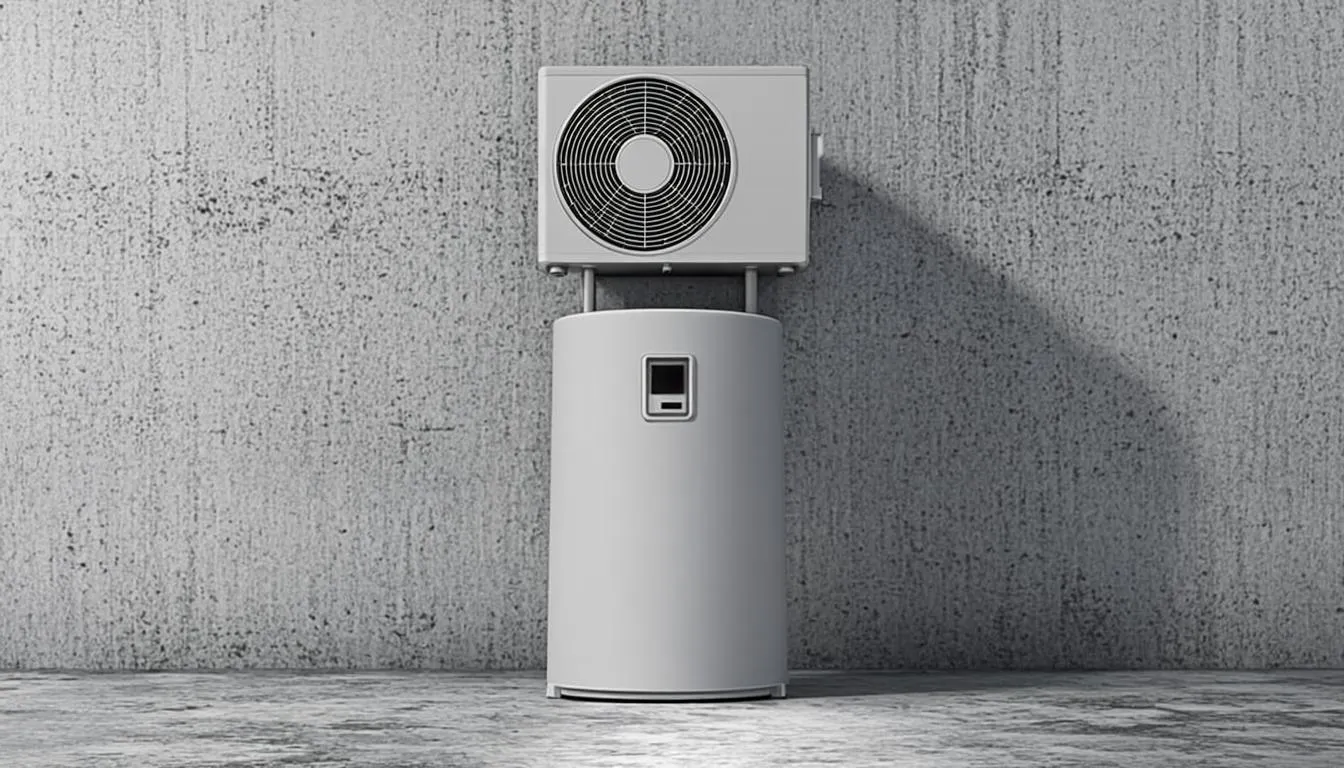
Illustrative image — a heat pump water heater sized and placed for a household in Leesburg.
Tankless sizing lives in flow rates; heat pump sizing lives in storage arithmetic. The unit recharges steadily rather than instantly, so the question is not how fast it heats but how much deliverable hot water it fields when your household's heaviest hour arrives.
Why Heat Pump Sizing Is Its Own Exercise
A resistance tank recharges with brute force, so undersized tanks partially hide their shortfall in fast recovery. A heat pump recharges gently by design, which makes honest sizing matter more: the tank must carry the demand curve with the compressor's steady pace, bridged by hybrid mode only when truly needed.
First Hour Rating: The Number That Matters
Every model publishes a first hour rating: the total hot water the unit can deliver in a heavily-drawn hour, combining stored volume with recovery during that hour. It is the closest thing to a usable capacity number, and household sizing starts by comparing it against your worst realistic hour of draws.
Household Demand Beyond Headcount
Occupant count anchors the estimate, but usage patterns sharpen it: morning shower stacks, evening appliance runs, work-from-home lunchtime draws. Bathrooms count, obviously, and so do dishwashers and washing machines. Two households of four can sit in different size classes entirely.
The Standard Tank Classes
Residential heat pump water heaters cluster in familiar volume classes: compact households fit the smaller end, typical families occupy the middle, and large or demand-heavy households justify the largest class. ENERGY STAR's guidance notes that choosing the larger tank within your space and budget often improves satisfaction, since headroom forgives the mornings when everything runs at once.
How Heat Pump Recovery Differs
The compressor recharges the tank at a measured pace that varies with room conditions; cooler rooms recharge slower. Resistance backup recharges fast but spends efficiency, which is why mode management matters: hybrid mode should be the exception that rescues peaks, not the default that erases savings. Our technology guide explains the modes in detail.
Common Sizing Mistakes
- Sizing by occupant count alone, ignoring the household's real heaviest hour
- Choosing a tank too large for the room's air volume, which starves the heat pump side
- Ignoring the space: a bigger tank still needs airflow and condensate routing
- Treating hybrid mode as permanent, quietly erasing the savings the technology exists to deliver
Our installation requirements guide covers the space side of that list, and the heat pump installation page turns the whole assessment into a written estimate. The tank services page remains the honest fallback when the space or the budget says the middle classes are wrong for you, and the phone above answers around the clock.
The takeaway: Tank classes describe storage; first hour rating describes deliverable hot water. Size against your heaviest hour, respect hybrid mode's bridge, and the unit disappears into the routine.