How a Tankless Water Heater Works
How Does a Tankless Water Heater Work?
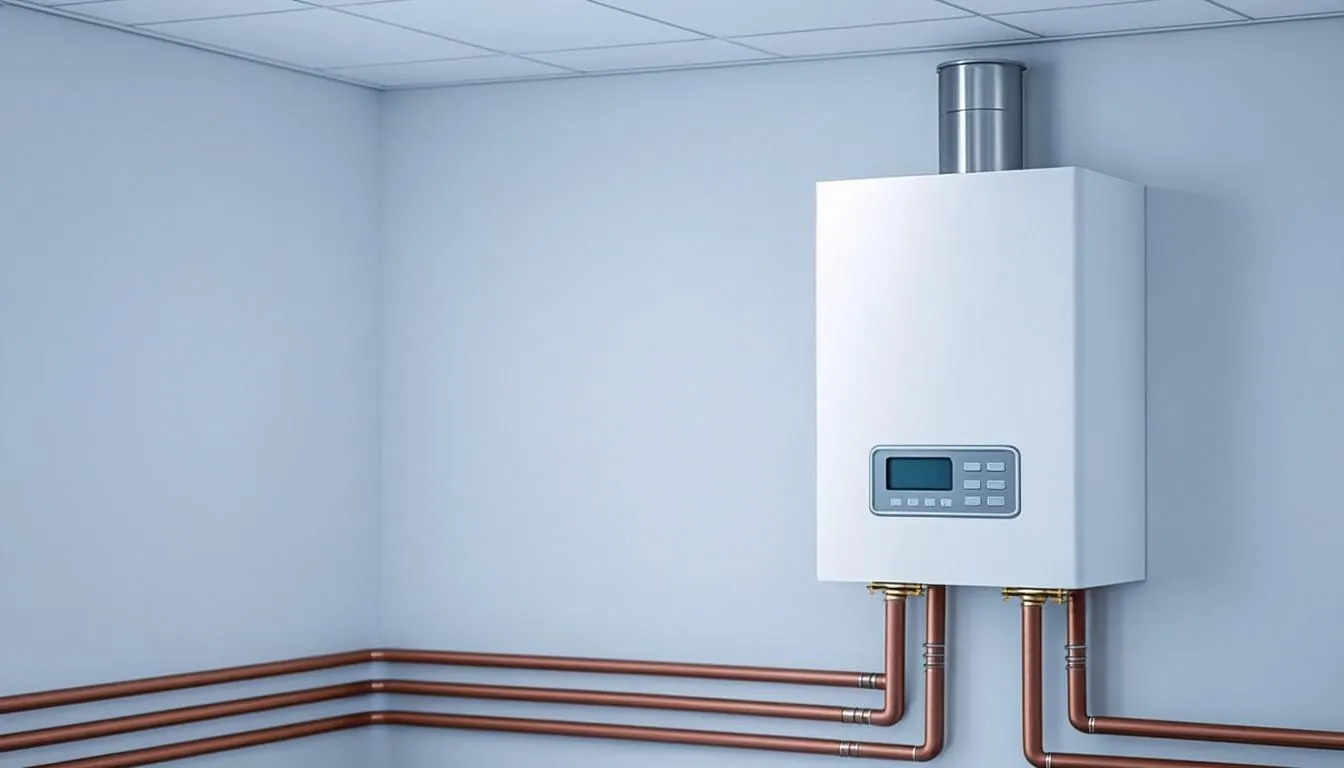
Illustrative image — a wall-hung tankless water heater photographed during a Leesburg installation.
The marketing version is short: endless hot water. The accurate version is more interesting, because what happens inside that wall-hung box when you twist a faucet explains every sizing rule, every maintenance interval, and every limitation an honest installer will mention. Here is the sequence, step by step.
What an On-Demand Water Heater Actually Is
A tankless water heater holds no stored hot water at all. Where a tank keeps tens of gallons heated around the clock, an on-demand unit is a heat exchanger waiting for a signal. Water passes through the exchanger only when a fixture calls, and heating happens in the seconds that water spends inside the unit. Nothing is kept hot when nobody is using it, which is where the efficiency story starts, and nothing is drained by a long shower, which is where the comfort story starts.
The Path Water Takes Through the System
Cold supply water enters through an inlet assembly that includes a filter screen, passes the flow sensor, and travels into the heat exchanger. There it absorbs heat across a serpentine pathway engineered to squeeze maximum transfer from a short transit. Heated water exits toward the fixture, and the whole journey typically completes in well under a minute of actual contact time. The filter and sensor are small parts with outsized importance: they protect everything downstream, which is why maintenance starts with them.
What Happens When You Open a Hot Water Tap
Flow sensor activation
Opening a fixture creates flow, and the sensor registers it. Units require a minimum activation flow before they respond at all; a slow trickle from a faucet aerator can sit below that threshold, which surprises owners who expect hot water at any flow rate.
Burner or element response
Once flow is confirmed, the control board fires the gas burner or energizes the heating elements. Gas units complete an ignition sequence and prove a flame before proceeding; electric units ramp elements in stages. This all happens in seconds, not minutes.
Heat exchanger operation
The exchanger transfers combustion heat, or element heat, into the water stream as it snakes through. Transfer efficiency is the unit's engineering signature, and scale on exchanger walls is the enemy of it, which is why our flushing guide spends so much time on water quality.
Temperature control
Outgoing temperature is set at the unit and held there: sensors read outlet temperature and the board modulates burner or element output continuously to hold your setting despite changing flow. That modulation is why modern units hold temperatures steadier than older generations ever did.
When Demand Stops
Close the tap and flow ceases; the sensor sees it stop and the unit shuts down, burner first, followed by a brief purge. Standby draw ends there. A household that uses hot water three hours a day pays to heat water only in those hours, which is the on-demand bargain in one sentence.
Gas and Electric Units, Side by Side in Operation
Both technologies share the sensing and control logic. They differ in the heat source and its appetite: gas units demand fuel capacity, venting, and combustion air, while whole-house electric units demand enormous circuit capacity from your panel. The infrastructure tail wags the equipment dog, and our gas tankless page and electric tankless page document what each path requires in real houses.
The Limits Worth Knowing Before You Buy
- Output is a flow rate at a temperature rise, so winter inlet water shrinks effective capacity
- Minimum activation flow means very low draws may not fire the unit
- Simultaneous fixtures stack demand faster than storage intuition suggests
- Scale and sediment slowly throttle the exchanger without visible warning
None of those limits are dealbreakers; they are sizing inputs. Our tankless installation page turns them into a measured plan for your specific house.
The takeaway: Tankless heaters trade storage for speed: a sensor sees flow, a heat exchanger responds, and hot water arrives in seconds. Understanding that chain explains both the appeal and the sizing rules.