Is Tankless Conversion Worth It
Is Converting from a Tank Water Heater to Tankless Worth It?
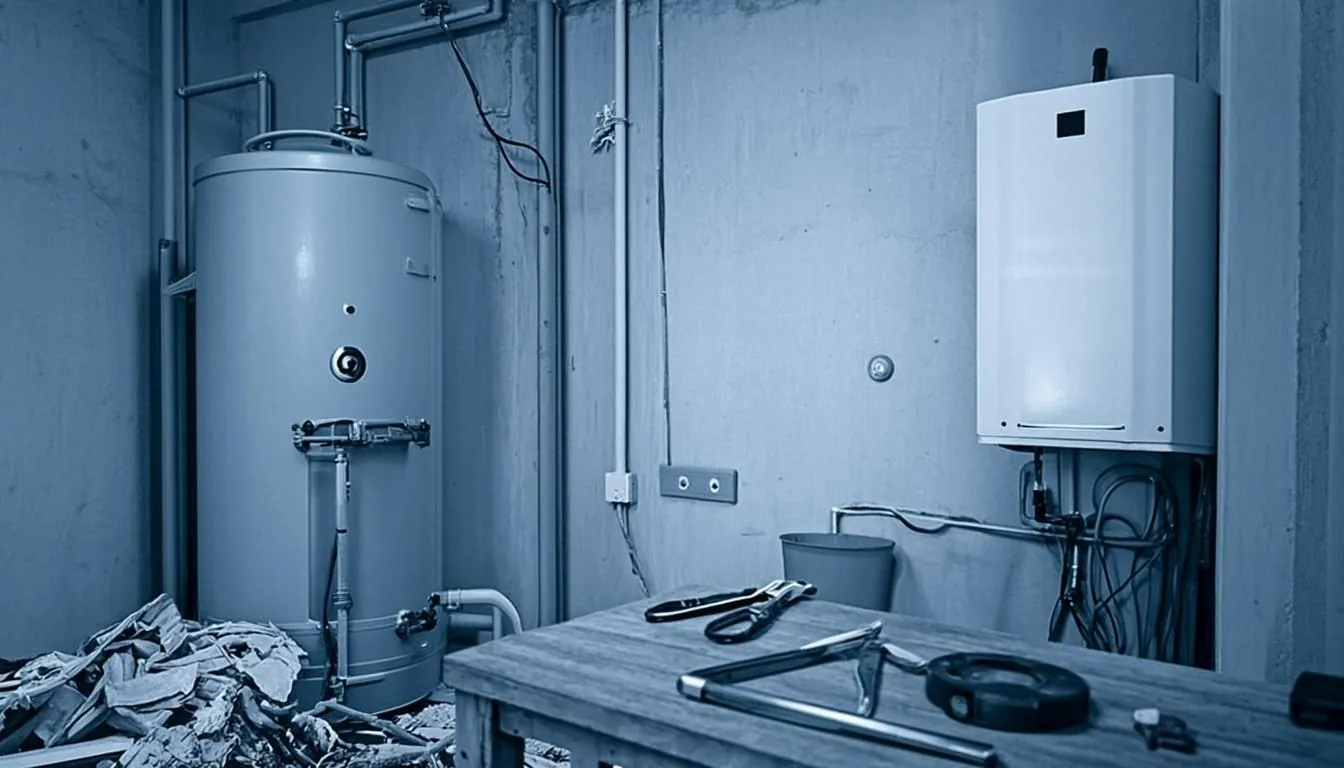
Illustrative image — a storage tank removed as a Leesburg home converts to a tankless water heater.
Worth it for whom? That question decides everything, and most conversion content online skips straight past it. This article gives the honest version: what changes, what it costs, and the specific situations where each answer wins.
What Actually Changes When You Switch
Storage disappears from the equation. Instead of a reservoir draining and reheating, a heat exchanger responds to flow. Your comfort ceiling moves from first-hour rating to gallons-per-minute at temperature rise. Your floor space frees up. Your utility bill drops by the standby losses the tank was paying every hour. And your utility room gains responsibilities: a condensate line perhaps, higher fuel demands, maintenance rhythms the tank never needed.
The Genuine Benefits
- Longer showers without strategic scheduling, within flow limits
- Standby losses eliminated, which is most of the efficiency story
- Floor and closet space returned to storage
- Service life often stretches beyond tank expectations with good care
- Temperature held electronically rather than by tank thermostat swings
The Costs and Limits, Stated Plainly
Conversion costs more than a tank swap because the house changes, not just the appliance. Gas lines sized for tank loads rarely feed a tankless burner. Venting gets rerouted. Condensing models add condensate drainage. Electric conversions add serious circuits. And the endless-water promise has an asterisk: simultaneous demand still must fit the unit's flow rating. The multiple-shower guide explains that boundary honestly.
Gas Tank to Gas Tankless Conversions
The most common path. The existing tank's gas line usually upsizes, venting reroutes to the new unit's requirements, and the project files gas and plumbing permits separately in Loudoun County. Homes with healthy gas infrastructure convert cleanly; the survey confirms it rather than assumes it.
Electric Tank to Electric Tankless Conversions
Here the panel becomes the project. Whole-house electric units need dedicated circuits and service capacity many homes lack, so we measure the main service first and price any upgrade as its own line. Where the panel cannot carry the load, a hybrid heat pump often serves better, and the electric tankless page explains both verdicts.
Switching Fuel Types Mid-Conversion
Some conversions change fuels: electric tank to gas tankless where gas service reaches, or either tank type to propane where it does not. Fuel switches add infrastructure work, and the fuel comparison guide helps you weigh the options before committing.
When Conversion Makes Financial Sense
Highest-return cases share a profile: households whose demand has outgrown their tank, plans to stay in the home long enough for savings to compound, gas service already present, and a tank nearing replacement anyway. Converting a failing tank converts once instead of buying a tank you plan to abandon later.
When Keeping the Traditional Tank Is Better
Sometimes the tank wins: rental turns on tight timelines, panel or fuel infrastructure that would dominate the budget, low and spread-out usage that never stresses the tank, or near-term moves where the upgrade will not pay back. The tank services page treats that answer with respect. And the conversion page plus the gas installation page show the full scope when the numbers favor going tankless. Either way, the estimate carries both paths priced, and the phone behind it answers around the clock.
The takeaway: Conversion is worth it when your demand pattern and infrastructure align with what tankless does well, and not when they do not. The written estimate exists precisely to tell you which house you have.