Tankless Keeps Shutting Off
Why Does My Tankless Water Heater Keep Shutting Off?
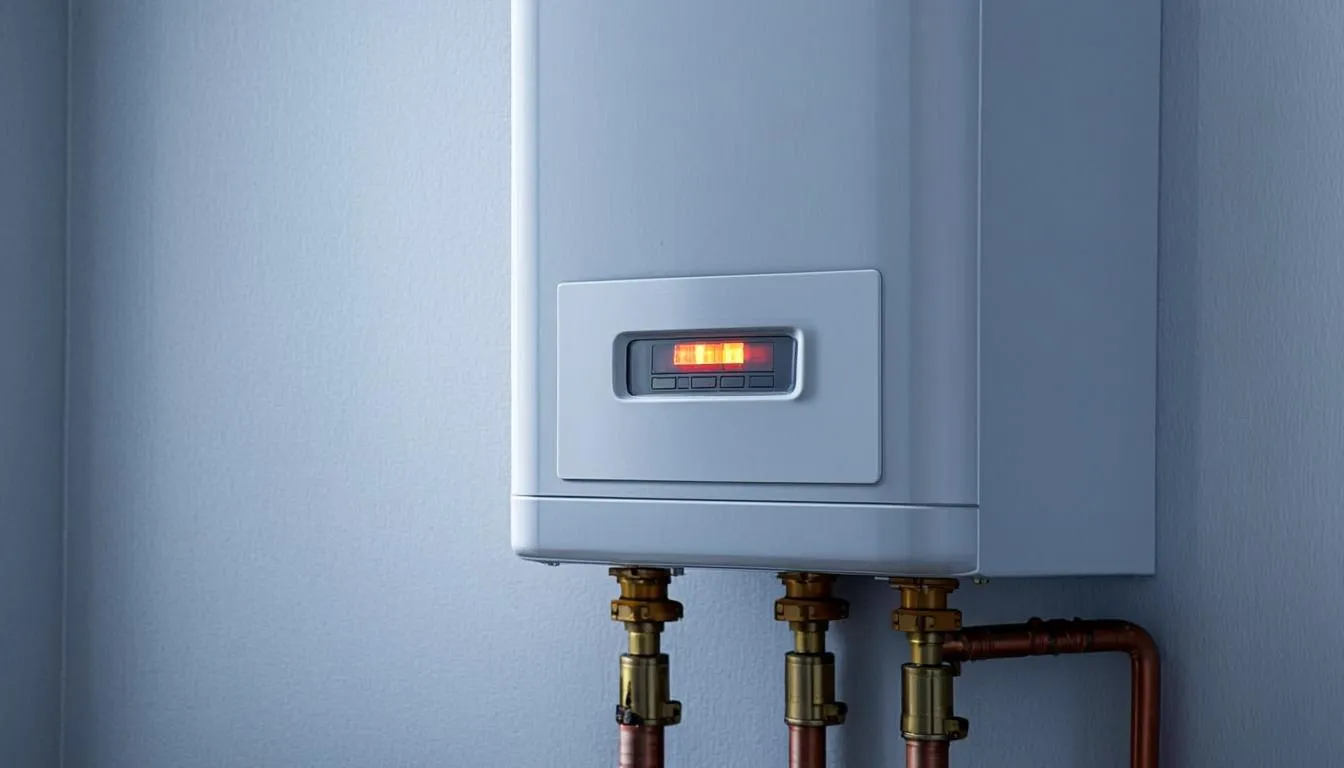
Illustrative image — a tankless water heater displaying a fault during repeated shutdowns.
A shower that dies mid-run and comes back is more annoying than total failure, and it is more diagnostic too. Repeated shutdowns mean a protection circuit is doing its job; the question is which one keeps tripping.
Common Reasons Units Shut Down Repeatedly
Shutdown triggers cluster around five systems: the fuel supply, the venting, the flow sensing, the thermal limits, and the scale load on the exchanger. Each produces a distinct rhythm of failure that diagnosis can read.
Insufficient Gas or Electrical Supply
A gas unit burning at full demand needs the line to sustain it. When another appliance draws simultaneously, or the line was never sized for the burner, pressure sag can extinguish or destabilize the flame, and the unit protects itself by stopping. Electric equivalents trip breakers under the same logic. Fuel-starvation shutdowns cluster when households run multiple gas appliances together.
Blocked Venting or Combustion Problems
Restricted venting, whether from debris, snow, nesting, or an incorrect original installation, destabilizes combustion, and the board's response is shutdown. Seasonal patterns matter here: units that shut down more in winter are often telling a vent or intake story.
Flow Sensor Issues
The unit fires only when it believes flow exists and stops when the reading wavers. A fouled sensor, a clogged inlet screen, or a filter restriction can make flow readings flicker, and flickering reads as stopping. The fix is often a fifteen-minute cleaning rather than a major repair, which is one reason this symptom should not wait.
Overheating and Safety Protection
Exchanger temperature limits exist to protect the heat exchanger and the household. When readings climb past them, the unit halts. Overheat shutdowns often follow reduced flow through the exchanger, which brings the next cause into view.
Scale-Related Performance Problems
Scale insulates exchanger walls and narrows passages. The unit works harder, runs hotter, and trips thermal limits that a clean exchanger would never touch. If shutdowns grew gradually worse over months, scale is the leading suspect, and a descaling visit both diagnoses and treats. Our flushing guide sets the rhythm that prevents the next episode.
How Technicians Diagnose Repeated Shutdowns
The visit reads the fault history from the control board first, because the unit records what tripped it and when. Then measurements follow the pattern: gas pressure under load, combustion observation, flow sensor verification, thermal readings, and exchanger condition. Findings become a written repair scope on our repair page, and where the pattern points at maintenance rather than failure, the maintenance team restores the rhythm the same visit. The phone line above answers any hour a shower goes cold.
The takeaway: Repeated shutdowns are the unit protecting itself, and the trigger names the system that needs attention. Diagnosis reads the pattern; guessing resets the clock until the next cold shower.