Tankless Low Flow & Temperature Fluctuations
Why Does My Tankless Water Heater Have Low Flow or Fluctuating Temperature?
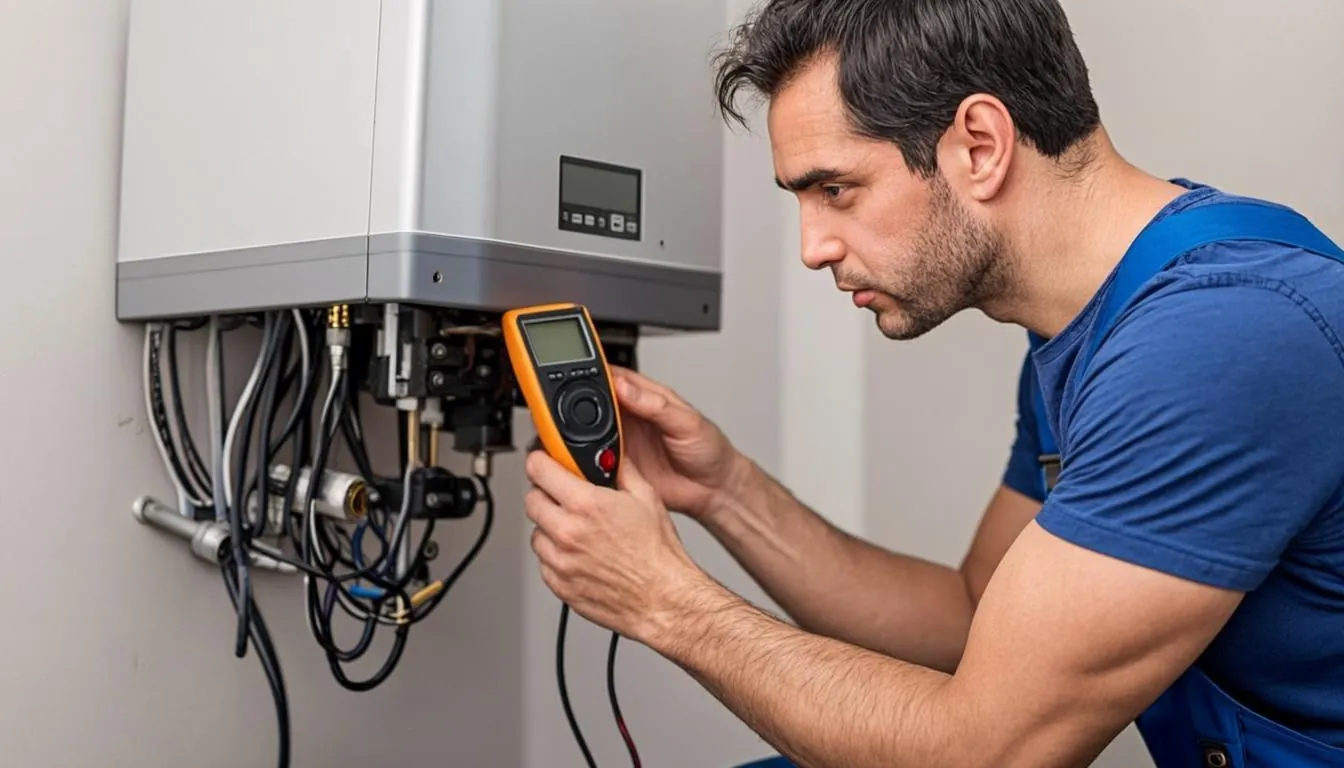
Illustrative image — a tankless water heater diagnosed for low flow and temperature swings.
Two complaints arrive together often enough that they share a guide: flow that has weakened, and temperature that will not sit still. Both describe the water path, and both have causes you can understand before the technician arrives.
Low Flow vs. Low Pressure: Different Problems
Weak flow at one fixture while others run fine points local, at an aerator or valve. Weak flow everywhere points upstream, toward the unit's water path or the supply itself. Separating the two takes one experiment: run several fixtures and compare. The result steers everything that follows.
Clogged Inlet Filters
The inlet screen is the unit's first defense against sediment, and its job collects evidence: grit, scale flakes, and debris gather on it over months. A loading screen throttles flow into the unit, which weakens every fixture downstream. Cleaning it is a manual-listed task and the first station of every diagnosis.
Mineral Scale Restricting the Exchanger
Inside the exchanger, scale narrows the passages water must thread. The restriction builds gradually, so owners often adapt without noticing until the flow no longer feels normal. Descaling restores the passages, and the visit's findings set the interval that keeps them open, as our flushing guide explains.
Minimum Activation Flow
Tankless units require a minimum flow before they fire at all. Fixtures running gently, or flow reduced by a loading filter, can sit below the threshold, producing lukewarm deliveries that feel like temperature problems. Understanding the threshold reframes several mysterious complaints at once.
Simultaneous Demand Stretching the Unit
When combined fixture flow exceeds what the unit serves at the current temperature rise, output thins and swings. The pattern is recognizable: fine alone, weak together. Our simultaneous demand guide covers the math and the fixes, from upsizing to cascaded units.
The Cold-Water Sandwich
Between two hot-water draws, a slug of cooled water sits in the line. When the second draw starts, that slug passes the fixture first, producing a brief cold burst inside an otherwise hot run. It is physics, not malfunction, and recirculation or trigger-practice at the tap manages it where it annoys.
Flow Sensor and Mixing Valve Problems
When cleaning and descaling change nothing, components join the suspect list: a wandering flow sensor misreports demand, and fixture or internal mixing valves can blend temperatures unpredictably. These diagnoses belong with instruments, and the findings land in a written repair scope on our repair page.
When to Call for Repair
Call when the easy stations pass and symptoms persist: filter clean, demand modest, flow still weak or temperatures still swinging. Where the cause turns out to be sizing rather than failure, the upgrade page prices the honest path, and where maintenance is overdue, the maintenance team restores the baseline. Diagnosis is one visit; the phone above answers any hour.
The takeaway: Flow and temperature complaints share a short list of causes, and most live in the water path: filters, scale, activation thresholds. Ordered diagnosis finds the culprit without replacing good parts.