What Is a Heat Pump Water Heater
What Is a Heat Pump Water Heater and How Does It Work?
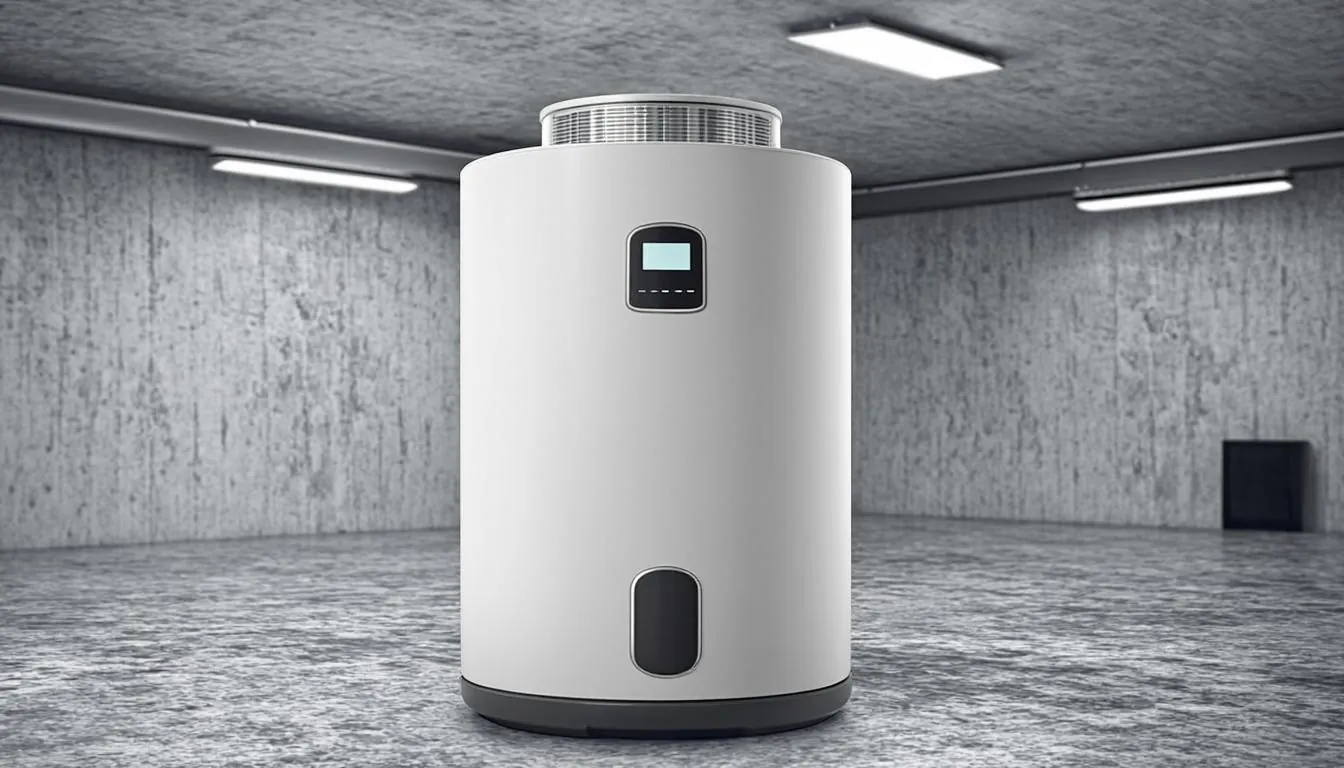
Illustrative image — a heat pump water heater installed in a Leesburg basement.
Heat pump water heaters have been around long enough to be proven and still surprise homeowners who only know tanks and tankless. This guide explains what the technology actually is, in the order its parts work.
The Short Definition
A heat pump water heater is a well-insulated storage tank topped with a heat pump module. Instead of generating heat with electric elements as the primary source, the module pulls warmth from the surrounding air and deposits it into the stored water. Electricity runs the harvest, not the heat itself, and that reversal is where the efficiency multiples come from.
How the Machine Moves Heat
Air intake and evaporator
A fan draws room air across an evaporator coil holding refrigerant. The refrigerant, chosen for its appetite for absorbing warmth, picks up heat even from air that feels cool to you, and vaporizes as it does.
Refrigerant and compressor
The compressor squeezes the vaporized refrigerant, which raises its temperature dramatically. Compression is the trick that turns lukewarm room air into a heat source hot enough to warm water efficiently.
Heat transfer to the stored water
The hot refrigerant flows through a coil wrapped around or immersed in the tank's water, giving its heat to the supply before the cycle repeats. The tank recharges gradually, the way a tank normally would, just with far less electricity doing the work.
Auxiliary resistance elements
Backup electric elements remain inside the tank. They exist for moments when demand outruns the heat pump's pace or conditions push the unit into recovery mode. Well-managed households rarely lean on them, and their runtime is a useful efficiency telltale.
So What Is a Hybrid Water Heater?
Hybrid is the market name for this exact design: heat pump primary, resistance backup, storage tank underneath. The word describes the two-way operation, not a separate technology, and most units sold today carry it in their model names.
The Three Modes and When Each Fits
- Heat pump mode: compressor only, the efficiency champion for everyday use
- Hybrid mode: compressor plus elements during heavy demand, the default most households should live in
- Electric mode: elements only, a vacation or emergency setting that trades efficiency for recovery speed
Efficiency and Operating Performance
Certified models earn efficiency ratings that storage units cannot approach, because moving heat multiplies output per unit of electricity. ENERGY STAR reports that a household of four can save hundreds of dollars a year on electric bills compared with a standard electric water heater; the heat pump installation page carries the exact published figures and their sources.
Advantages and Limitations, Together
The advantages: dramatic operating savings on electric supply, storage simplicity, no combustion or venting, and dehumidification as a side benefit in basements. The limitations: the unit needs air volume and airflow to harvest from, it cools the room it lives in, it wrings condensate out of that air, and it costs more upfront than a basic tank. Our installation requirements guide walks the space and airflow assessments, and the savings guide walks the math. When the space argues back, the traditional tank page keeps the alternatives honest, and the phone line above answers any hour.
The takeaway: A heat pump water heater is a storage tank with a machine on top that harvests heat from your air. Moving heat costs a fraction of making it, which is the entire efficiency story, and the modes let you choose when to pay what.