Heat Pump vs. Electric vs. Gas
Heat Pump Water Heater vs. Electric Tank vs. Gas Water Heater
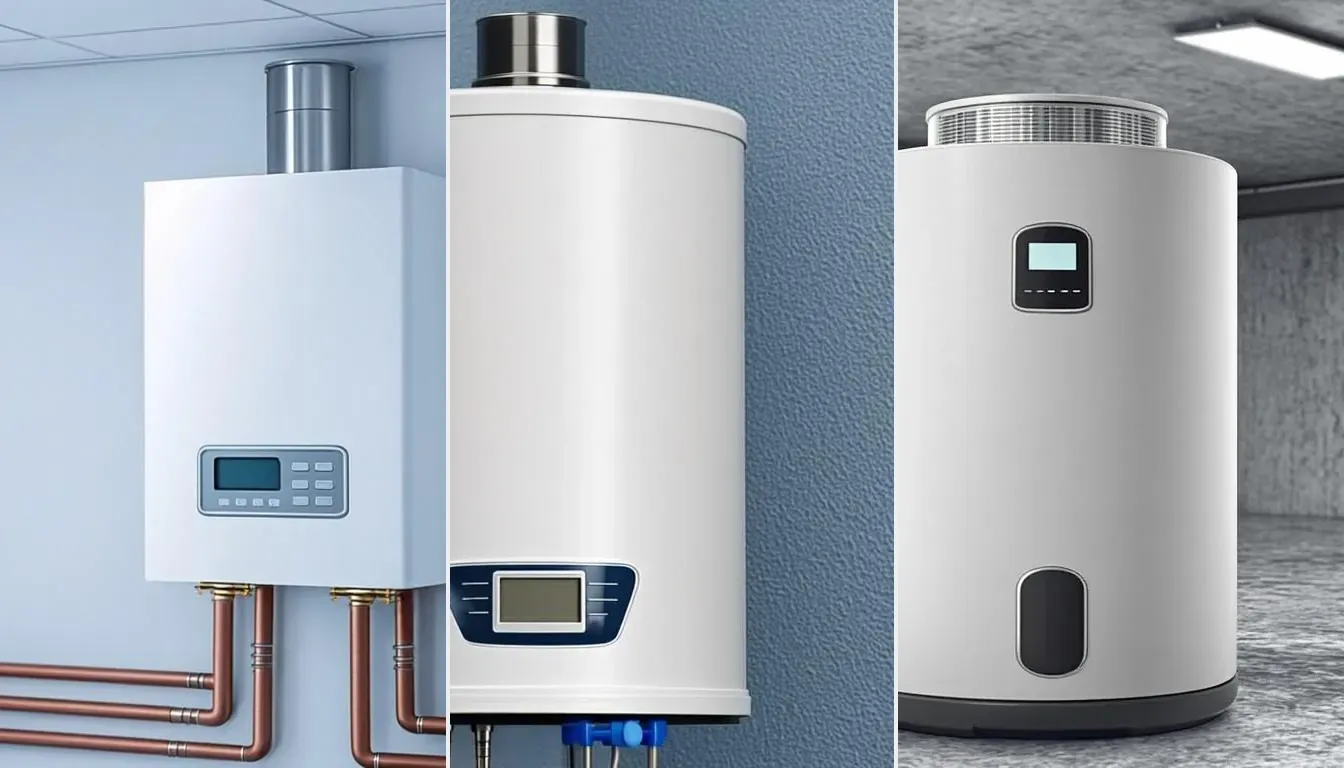
Illustrative image — different water heater technologies compared for a Leesburg home decision.
Choosing a water heater in 2020s America means choosing among four mature technologies, and marketing makes each sound universal. They are not. This comparison puts them side by side on the criteria that actually decide installations.
The Four Contenders at a Glance
| Criterion | Heat Pump | Electric Tank | Gas Tank | Gas Tankless |
|---|---|---|---|---|
| Stores hot water | Yes | Yes | Yes | No |
| Uses a heat pump cycle | Yes | No | No | No |
| Needs gas supply | No | No | Yes | Yes |
| Electrical demands | Modest | Standard | Varies by model | Varies by model |
| Condensate drain | Yes | No | Varies | Condensing models |
| Airflow needs | Yes, significant | No | Combustion air only | Combustion air per model |
Heat Pump vs. Standard Electric Resistance Tank
This is the comparison with the widest gap. Both store water and run on electricity, but the heat pump multiplies each unit of electricity into several units of heat moved, while resistance converts one into one. Certified models earn some of the largest efficiency savings in home equipment, with ENERGY STAR publishing substantial annual savings for households of four replacing standard electric tanks; exact figures live on our heat pump page. The heat pump's costs are spatial: air volume, airflow, condensate drainage, and a compressor's quiet hum.
Heat Pump vs. Natural Gas Storage Tank
Gas tanks deliver fast recovery from cheap fuel and need no special space considerations beyond venting. Heat pumps deliver lower operating cost on electric supply and no combustion at all. Households with gas service weigh fuel prices against efficiency multiples; homes without gas find the comparison ends before it starts.
Heat Pump vs. Gas Tankless
Different comfort models entirely. Tankless supplies continuous flow without storage and rewards homes with gas infrastructure and stacked demand; heat pumps supply stored volume with unmatched electric-efficiency and reward homes with suitable space. Our tankless page and flow guide cover the tankless side in depth.
Installation Requirements Compared
Electric tanks install almost anywhere a circuit reaches. Gas tanks add venting. Tankless adds fuel capacity, venting engineering, and possibly condensate. Heat pumps add the space-and-airflow assessment that our requirements guide details, plus condensate routing. Permits follow the trades involved either way.
Capacity and Recovery
Storage technologies are judged on first-hour rating and recovery speed; gas tanks recover fastest, resistance tanks slowest, heat pumps recover steadily with hybrid backup bridging peaks. Tankless is judged on flow at temperature rise instead, a completely different lens.
Energy Consumption and Operating Cost
Heat pumps post the lowest electricity consumption of any electric option by a wide margin. Gas equipment tracks fuel prices, which currently price favorably for heating. Operating cost comparisons deserve your actual rates and usage, which is why we model them in estimates rather than quoting averages.
Equipment and Installation Cost
Resistance tanks price lowest, gas tanks and heat pumps occupy the middle, and tankless typically prices highest once infrastructure joins. The honest framing prices installation complexity, not just the box.
Which Technology Fits Which Leesburg Homes
All-electric homes with usable basement space: heat pumps, decisively. Homes with gas service and heavy simultaneous demand: gas tankless or a gas tank. Tight budgets on quick timelines: a well-sized resistance tank remains respectable. Rental turns: same. The traditional tank page and the conversion guide cover the alternatives, and one call puts any combination of them on a written estimate, any hour.
The takeaway: Four technologies, four different bargains. Heat pumps multiply electricity, tanks store simplicity, tankless trades storage for flow. The house's fuel, space, and demand pick the winner.