Leesburg VA Water Hardness
Does Leesburg VA Have Hard Water? What Homeowners Should Know
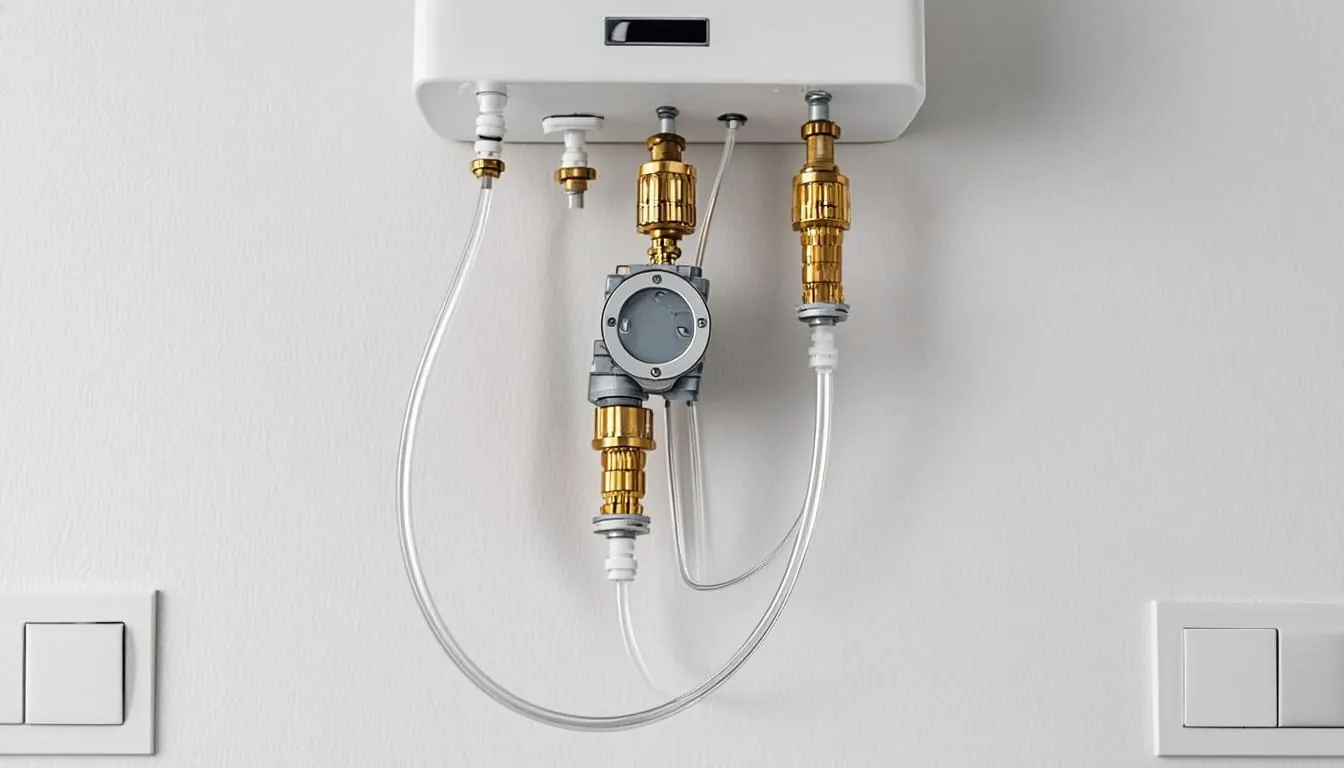
Illustrative image — water quality testing discussed beside a tankless water heater in Leesburg.
Hard water questions arrive at every estimate meeting, and the honest answer is always the same shape: it depends on which pipes feed your house. Leesburg homeowners sit on several different water systems, each with its own chemistry and its own report. This guide sorts them out.
What Determines Water Hardness in the First Place
Hardness measures dissolved calcium and magnesium, picked up as water travels through rock and soil. Surface sources and groundwater carry different mineral signatures, treatment plants adjust some qualities and not others, and distribution materials add their own traces. Two neighbors on different systems can pour visibly different water from identical faucets.
Where Leesburg Homes Get Their Water
Three supply situations dominate our service area, and knowing which one describes your house is the first step:
| Your supply | What to check, and where |
|---|---|
| Town of Leesburg water | The Utilities Department's annual Water Quality Report |
| Loudoun Water central system | The authority's annual report; surface water drawn from the Potomac River and Goose Creek |
| Loudoun Water community systems | Quality information for your specific community system |
| Private well | Independent testing, arranged by you |
Leesburg Town Water vs. Loudoun Water
The Town of Leesburg operates its own utility department inside town limits, while Loudoun Water, a separate authority, serves much of the surrounding county, including communities whose systems draw on well fields rather than the river sources. Confusing the two sends homeowners to the wrong report, so the address check comes first. Towns beyond Leesburg run their own systems too: Round Hill and Middleburg operate municipal water within their boundaries, which matters when you live just past either one's corporate limits, as our Round Hill and Middleburg pages explain for their parcels.
How to Read a Water Quality Report Without Over-Reading It
The Town published its most recent annual Water Quality Report on April 1, 2026, covering the 2025 calendar year, and Loudoun Water publishes equivalent reports for its systems. These documents verify regulatory compliance beautifully. What they do not always do is report hardness, so do not infer it: if the report's table lacks a hardness or calcium figure, the honest move is testing, not assumption.
Source: Town of Leesburg 2025 Water Quality Report announcement.
How Hardness Treats a Water Heater
Inside any heater, temperature change pulls dissolved minerals out of solution and onto hot surfaces. Tank heaters collect it as sediment on the floor; tankless exchangers collect it as insulating scale on their walls. Either way, efficiency pays the tax first and equipment pays it eventually, which is why our hard water guide treats testing as the anchor of every maintenance plan.
Testing at Home, Properly
Test strips and titration kits give quick ballparks; laboratory testing gives numbers worth planning around. Well owners should test directly and periodically: Loudoun County's household water quality testing program covers wells, cisterns, and springs at low cost, and the county health department recommends annual bacteria testing for private wells alongside the mineral panel.
Source: Loudoun County Household Water Quality Testing Program.
When a Softener Makes Sense
Treatment follows the number, not the rumor. Whole-home softeners exchange hardness minerals and protect everything that touches water; point-of-equipment scale prevention targets the heater specifically at lower cost. Houses with tested-moderate hardness may need only a matched flushing rhythm, as our flushing guide explains, rather than any hardware at all.
Well Owners: Your Personal Checklist
- Annual bacteria testing, per county health guidance
- A mineral panel including hardness, iron, and pH
- Sediment review at any filtration hardware you already own
- A maintenance rhythm for heaters matched to the tested result
Whatever your supply, the equipment conversation stays the same: the maintenance team calibrates care to tested water, and the installation page sizes new equipment to the supply that will feed it. The phone above answers around the clock, and the testing advice is always free.
The takeaway: Leesburg water is safe by every standard it is tested against, but safety says nothing about hardness. Read the right report for your supply, test where data is missing, and let the number set your water heater's maintenance rhythm.