Tankless Water Heater Lifespan
How Long Does a Tankless Water Heater Last? Lifespan and Replacement Signs
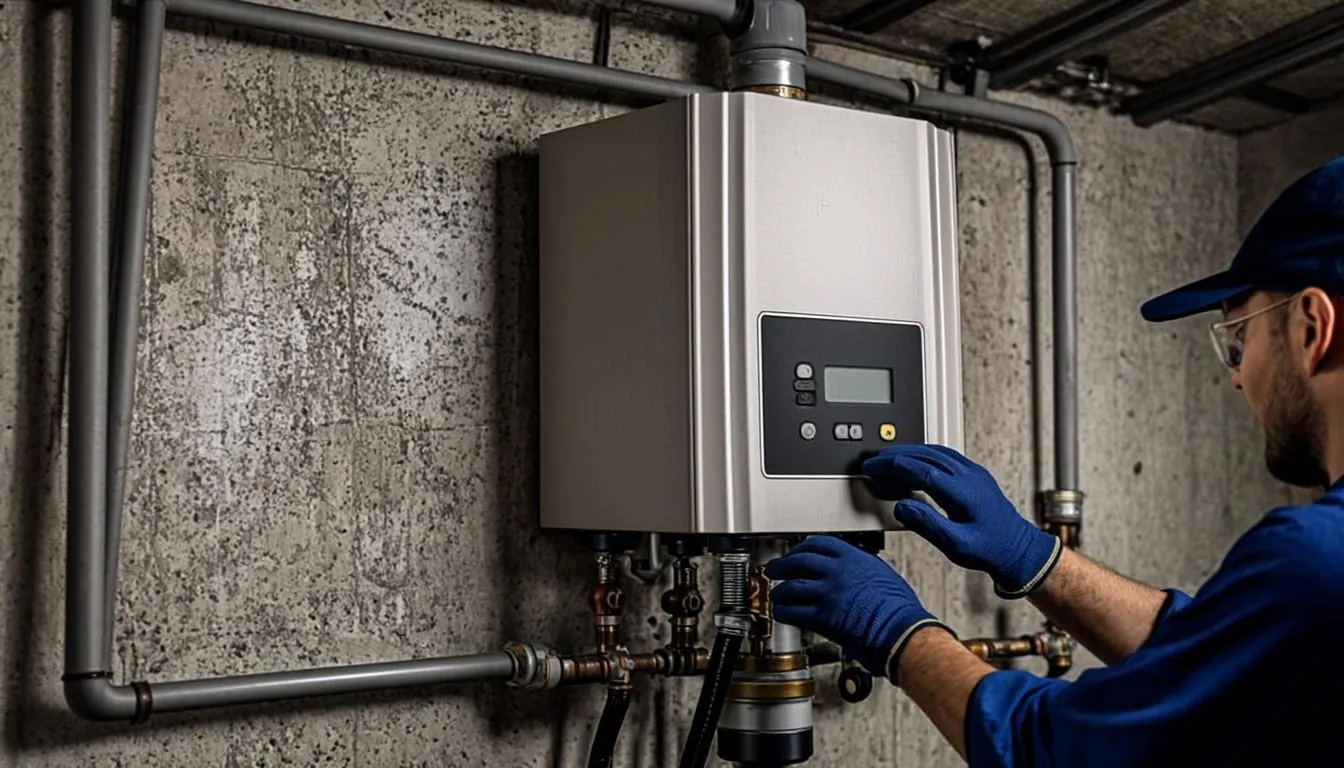
Illustrative image — an aging tankless water heater evaluated for replacement in a Leesburg home.
Manufacturers rate components, warranties run for defined periods, and yet the truthful answer to the lifespan question is a range your own house controls. Two identical units installed the same week in the same town can age at visibly different speeds. What separates them is below.
Why There Is No Single Number
A tankless water heater is a heat exchanger plus supporting components. The exchanger itself has no moving parts, and many manufacturers back it with long warranties that reach well into double digits, while pumps, sensors, fans, and boards carry shorter terms. Equipment rarely fails all at once; it ages component by component, and which components dominate the story depends on conditions the warranty cannot predict.
The Four Forces That Set Your Unit's Clock
Water quality
Hardness and sediment are the primary agers. Mineral scale plates onto exchanger walls and insulates them, forcing higher operating temperatures that accelerate wear. Supplies differ across our service area, town water to Loudoun Water territories to private wells, which is why our water hardness guide pushes testing before scheduling. Softened or filtered water visibly slows the clock.
Maintenance rhythm
Regular flushing, filter cleaning, and inspections counter most of what water quality starts. Units on a steady maintenance cadence routinely outlive neglected neighbors by years, and the maintenance page documents what a complete visit includes.
Operating conditions
A unit sized with margin runs gentler than one pinned at maximum output every morning. Constant high-fire operation, steep winter temperature rises, and heavy simultaneous demand all add wear per year of calendar time.
Installation quality
Proper gas sizing, correct venting, clean condensate routing, and stable water pressure prevent the low-grade stresses that shorten component life. Installation shortcuts surface years later as failures nobody connects to the original work.
Signs Your Unit Is Aging Out
- Error codes repeating across seasons despite service
- Output that no longer matches what sizing says it should deliver
- Temperature stability drifting even after descaling
- Parts becoming difficult to source for the model
- Repair invoices arriving close together
Repair or Replace: How We Frame the Decision
One repair on a unit that otherwise runs well is normal ownership. The calculus changes when failure patterns repeat or a major component joins the queue. We write both paths on the same estimate: the repair with its expected remaining value, the replacement with its full scope. Seeing them side by side, priced for your actual house, turns a stressful call into an arithmetic one. The replacement page and repair page explain what each path includes.
Stretching the Years You Already Own
Flush on a schedule matched to tested water hardness, keep inlet screens clean, watch for early error codes, and fix small issues before they compound. Our annual maintenance checklist turns those habits into a printable routine, and any technician visit adds its findings to the unit's history, which is exactly the record that makes eventual decisions easy.
The takeaway: No calendar tells you when a tankless unit is done; water quality, maintenance rhythm, and repair history do. Read the signs, price both paths on paper, and let evidence make the replacement call.