Tankless Maintenance Checklist
Tankless Water Heater Maintenance: The Annual Checklist
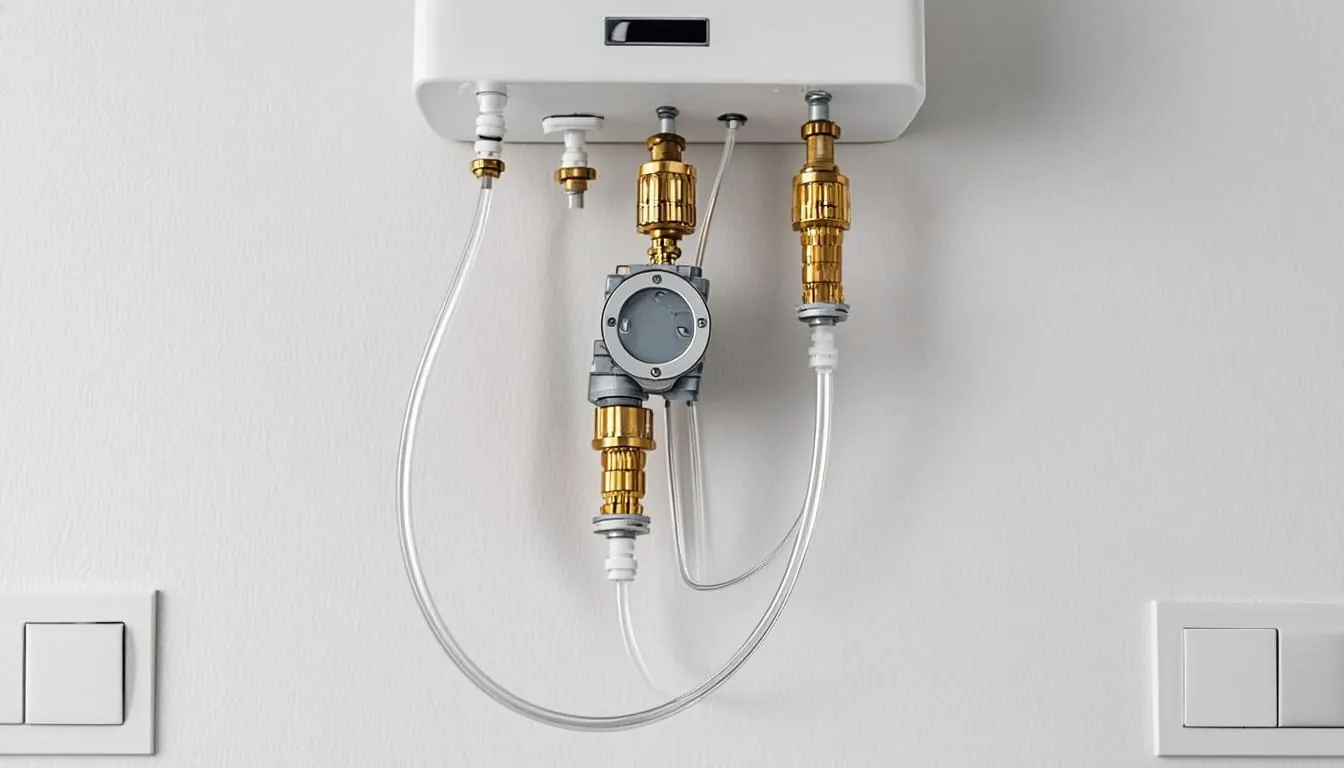
Illustrative image — a technician performing a full tankless water heater maintenance visit.
Manufacturers publish maintenance recommendations, and service visits turn them into a sequence. This checklist reflects the full circuit we run on maintenance calls across Loudoun County, in the order that finds problems earliest. Homeowners can use it to understand a visit or to check one they already paid for.
Why the Order Matters
Maintenance flows from the water's entry to the exhaust's exit, mirroring how the unit works. Each station either protects the next one or catches what the previous one missed. A visit that jumps around misses things; a visit that follows the circuit does not.
Station by Station
Heat exchanger inspection and descaling
The exchanger gets examined for scale and corrosion, then flushed with solution circulated at the proper strength. Interval follows your water, as our flushing guide explains, and the visit records what the descaling revealed.
Water inlet filter cleaning
The inlet screen protects the flow sensor from sediment. A clogged screen mimics dozens of different faults, which makes this small cleaning the highest-value minute of the visit.
Gas supply and combustion checks
Gas connections get leak-checked and combustion observed for stable burn. Gas work stays with qualified technicians; this is not a homeowner station, and the checklist labels it accordingly.
Venting and termination inspection
Vent runs, joints, supports, and terminations get checked against the model's requirements, because restricted or corroded venting produces faults that look like equipment problems.
Condensate line and neutralizer
Condensing models get their drain line flushed and neutralizer media checked, since a blocked condensate path will stop a unit faster than almost anything else.
Electrical connections and controls
Connections, grounding, and control operation get verified, and error history gets read from the unit's memory, which often tells a story the homeowner never saw.
Temperature and flow testing
The visit ends with the unit running: outlet temperature verified at the setting, flow response checked across fixtures, and performance compared against what the equipment should deliver.
Records and the next interval
Everything gets written down: findings, measurements, descaling results, and the recommended next interval. Warranty conversations always go better with records, and our lifespan guide shows how the history influences eventual decisions.
Printable Summary
| Station | Homeowner | Technician |
|---|---|---|
| Inlet filter | Visual check between visits | Clean, verify sensor flow |
| Heat exchanger | Watch for performance fade | Inspect, descale, record |
| Gas and combustion | Smell-report only | Leak check, burn observation |
| Venting | Look for damage outdoors | Measure against manual |
| Condensate | Watch for drips | Flush line, check media |
| Electrical | None | Connections, history read |
| Performance | Note any changes | Full test at temperature |
The full visit runs on our maintenance page, gas equipment questions live on the gas installation page, and when the checklist finds something worn, the repair team takes over with a written estimate, day or night.
The takeaway: A complete maintenance visit is a circuit, not a single task: filter, exchanger, fuel, vent, condensate, electrical, and a performance test at the end. Skip a station and the next repair call finds it.